Showing posts with label Partners in Crime. Show all posts

Friday, May 26, 2023

Gillespie Field Groove by Corey Lynn Fayman ~ Private Detective Mystery, Cozy Mystery @CLFayman @partnersincr1me

Gillespie Field Groove by Corey Fayman Banner

Gillespie Field Groove

by Corey Lynn Fayman

May 8 - June 2, 2023 Virtual Book Tour

About the Book:
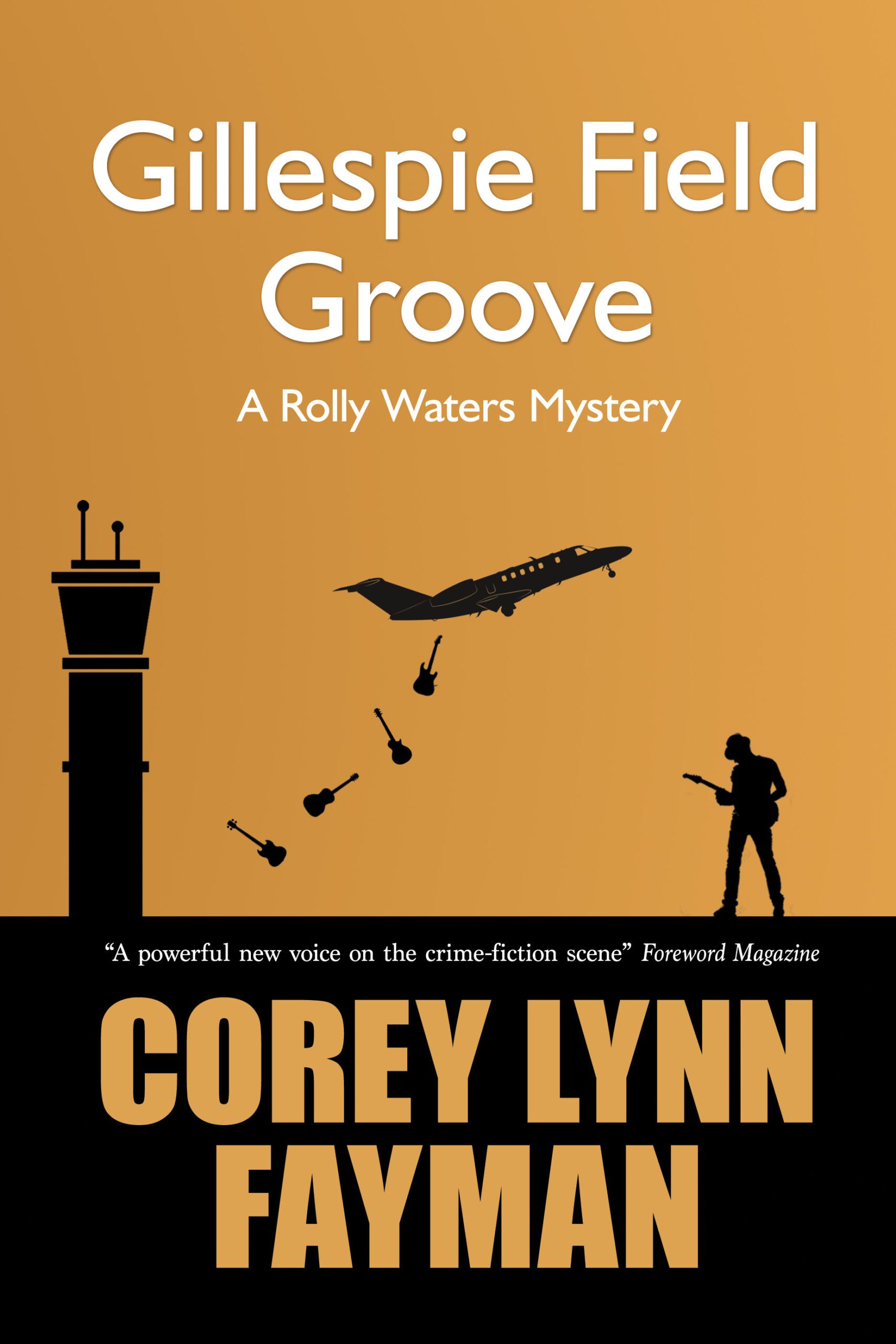
Gillespie Field Groove by Corey Fayman

An obscure rock'n'roll roadie dies under mysterious circumstances. A prized Jimi Hendrix guitar has gone missing. Can Rolly Waters save his new client from the ruthless collectors looking for it?

When nurse and fledgling pilot Lucinda Rhodes hires guitar-playing private detective Rolly Waters to track down a Stratocaster guitar owned by her deceased father, Rolly is thrilled to take on her case, especially when he learns the guitar’s original owner may have been Jimi Hendrix. But Gerry Rhodes’s reckless personal history leads to more questions than Rolly and Lucinda have bargained for, as an aging rock’n’roll impresario, his trophy wife, a Russian gangster and the FBI get involved. When a forty-year-old shooting accident reveals a surprising connection to a pop star’s hit record, Rolly sees darker forces at work. And his and Lucinda’s lives hang in the balance.

Praise for Gillespie Field Groove:

"Gillespie Field Groove hits all the right notes. Music fans and general mystery readers alike will enjoy this story’s irresistible beat."
~ blueinkreview.com

"Exciting, compelling, suspenseful, and reflective of the realities of the music industry and San Diego culture, Gillespie Field Groove is a thrilling mystery novel in which a man seeks to right the wrongs committed by greedy executives."
~ forewordreviews.com

"GILLESPIE FIELD GROOVE is a gripping mystery and a captivating ride through rock and roll history and San Diego’s music scene. It’s so authentic you can practically hear the fuzz and crunch of Jimi’s Stratocaster coming off the page."
~ Matthew Quirk, New York Times bestselling author of RED WARNING and THE NIGHT AGENT (now a Netflix series)

"Rolly Waters is back with a ripped-from-the headlines thriller custom made for music-lovers. Hired to hunt down a missing Fender Strat that may have belonged to Jimi Hendrix, Waters uncovers a series of intertwined mysteries with more twists than a crate full of guitar cables. Gillespie Field Groove is an uptempo page turner that shines a spotlight on the music industry’s darkest corners."
~ S.W. Lauden, author of BAD CITIZEN CORPORATION and THAT’LL BE THE DAY:A POWER POP HEIST

"Carefully crafted characters. Twists and revelations. Music and murder. A PI who plays guitar or a guitar player who dallies in detecting? Even Rolly Waters isn’t sure. Whichever it is, Corey Lynn Fayman’s latest gives you a real insight into what it means to be both. Like Don Quixote wielding a guitar instead of a sword. Awesome."
~ Pamela Cowan, author of COLD KILL

"GILLESPIE FIELD GROOVE is like an easter egg hunt filled with suspense and intrigue that also gives readers a straightforward look into the life of a working musician. I love this series."
~ Marc Intravaia, guitarist, RICHIE FURAY BAND; BACK TO THE GARDEN

Book Details:

Genre: Private Detective Mystery, Cozy Mystery
Published by: Konstellation Press
Publication Date: March 2023
Number of Pages: 276
ISBN: 0998748285 (ISBN-13: 978-0998748283)
Series: A Rolly Waters Mystery, 5th
Book Links: Amazon | Barnes & Noble | BookShop.org | Goodreads

Read an Excerpt:

The Nurse

Just after two in the afternoon, Rolly Waters sat at a round concrete table in the courtyard of Alvarado Hospital, nursing a cappuccino to which he'd added five drops of artificial sweetener. He was trying to cut sugar out of his diet. The woman across the table from him smiled. Her name was Lucinda Rhodes. She was a nurse at the hospital. Two years ago, Lucinda had seen Rolly at his worst, in the emergency room of a hospital in Brawley where the doctors had treated him for a black widow spider bite. Nurse Lucinda had kept tabs on him through the night, checking his blood pressure, giving him pills, and had fitted him with crutches before he checked out. Rolly didn't remember much else about that night, except that it had been hot in the desert, and everything smelled like fertilizer. He didn't remember giving his business card to the nurse. But Nurse Lucinda had one of his cards in her hand today. She placed it on the table like a bridge player dropping a trump card.

"I don't know why I kept this," she said. "I guess I thought it might come in handy someday. I'd never met a private investigator before. You were funny, not like I thought a detective would be. You flirted with me."

"I did?" Rolly said, hoping he sounded more amnesic than incredulous. "I hope I wasn't out of line."

"I've dealt with a lot worse," said Lucinda. "Besides, I thought you were kind of cute."

"What do you think now?" Rolly said, unable to resist. Lucinda smiled and redirected the conversation.

"You're a musician, right?" she said. "You play the guitar?"

Rolly nodded. He didn't usually drive out to meet potential clients as soon as they called, but his detective work had dried up. The hospital was only a fifteen-minute drive from his house, east on Highway 8 near San Diego State University. He'd gotten to know any number of the local hospitals over the years, interviewing accident victims for their lawyers. Sometimes he'd been in the accident.

"Tell me what you're looking for again," he said. "You said something about your father?"

Lucinda nodded, glanced over at the coffee stand, then back at Rolly. She appeared to be in her late thirties or early forties, a little wide around the middle, with an honest, gentle face. She seemed more down to earth than most of the women Rolly had dated. He wasn't dating Lucinda, though. She was a potential client. He'd gotten too close to a client once, gotten involved with her while working on her case. That was how he'd ended up in the emergency room in Brawley.

"My dad died," Lucinda said. "Last week."

"I'm sorry."

Lucinda stared into her coffee cup, contemplating the black liquid inside.

"He's why I moved here," she said. "From Brawley. It was three months ago. I knew he needed some help. I didn't see my dad much when I was growing up. I lived with my mother after they got divorced. She died ten years ago. Cancer. I don't have any siblings, so my dad was all the family I had left."

"What did your father do for a living?"

"He was in the music business, like you. One of those guys that travels around with bands."

"A roadie?"

Lucinda nodded.

"That's how they met, my mom and my dad. She used to tell me the story all the time. It was at a Jimi Hendrix concert. Here in San Diego. Dad was in charge of those speakers they put in front so the singers can hear themselves?"

"The monitors," said Rolly.

"Yeah. My mom was sixteen. She'd won some contest on at a radio station. That's how she got backstage for the concert. She was supposed to meet Jimi Hendrix, but the radio people messed something up, I can't remember exactly what it was, but he wouldn't talk to any of them. Jimi Hendrix, I mean. She met him later, thanks to my dad."

"She met your dad backstage?"

"It was outside, after the show. There was a riot. The police were there. Dad helped Mom get away. That's how she ended up on the band's tour bus. And the rest, as my mom liked to say, was history."

"How old was your dad?" asked Rolly.

"Twenty, I think. Maybe twenty-one. Not that big a difference but . . ." Lucinda shrugged. "Times were different then, I guess."

"Yeah," Rolly concurred. He was not about to throw stones at glass houses. There'd been girls at the clubs where his bands played, girls with fake IDs who were younger than he'd been. He hoped none of the ones he'd taken home had been legally underage, but thinking about it now in his forties made him a little queasy. As Lucinda had noted, times had changed. Some.

"Mom was gone for five days," Lucinda continued. "Her parents didn't know where she was. It made all the papers. This guy at the radio station got fired. Two years later, out of the blue, my dad comes back to town and looks up my mom. She was of age then and they got married. I came along later. I think they were trying to save their marriage by having a baby."

"They wouldn't be the first," Rolly said. Lucinda's story about her parents was interesting and her way of telling it made him like her even more, but he needed to get down to business, keep it professional. "How can I be of help?"

Lucinda reached in the front left pocket of her scrubs and pulled out a photograph. She placed it on the table.

"It's this photograph," she said. "My dad left it for me. I don't know why. I don't even know who the guy is."

Rolly picked up the photograph. It was a black man, no older than thirty. He was dressed in a seafoam-green suit, something a Motown act might have worn in the early seventies. The comparison wasn't far off. The man was a musician, with a white Stratocaster guitar strapped over his shoulder, as if he'd just stepped off, or was preparing to step onto, the stage.

"He's not Jimi Hendrix." Rolly said. "I can tell you that much."

Lucinda frowned.

"I may be from Brawley, Mr. Waters, but I'm not a total hick. I know he's not Jimi Hendrix. The thing is . . . it looks like my dad's guitar. The one Jimi Hendrix gave him."

Rolly leaned back in his chair and reassessed the guitar in the photograph. It looked like thousands of others, but if Jimi Hendrix had touched that Stratocaster even once, it was more valuable than the rest.

"You understand why I thought you could help me?" Lucinda said.

Rolly nodded. He stared at the photo again.

"You think this guy in the photo still has the guitar?"

Lucinda shrugged.

"I don't know. I remember seeing one like it in my dad's apartment when I was a kid. I remember him saying he didn't have much to give me, except that guitar, the one Jimi Hendrix gave him. He said it would be my inheritance."

"Could be a pretty nice inheritance," Rolly said.

"That's what I thought," said Lucinda. She leaned back in her seat and tapped both hands on the table. "I looked up some things on the internet. One of Jimi Hendrix's guitars sold for almost two million dollars."

"Well," said Rolly. "That was the guitar from Woodstock, the one Hendrix used to play 'The Star-Spangled Banner.' I don't think this one would be worth that much . . ."

"It'd be worth something, though, wouldn't it? If it came from Jimi Hendrix."

"Yeah." Rolly nodded. Any guitar Hendrix had touched would be worth a considerable amount to collectors, if it had provenance. That wasn't Rolly's area of expertise, but he knew people who could help him out with the valuation. He'd need to have the actual guitar in his hands, though. This one was only a photograph. And Jimi Hendrix wasn't in the photo.

"Do you have any other documentation or photos?" he asked.

Lucinda shook her head.

"When was the last time you saw the guitar in your dad's possession?"

"Maybe ten years ago." Lucinda shrugged. "I haven't really been through his stuff yet. The church said they could let me into his apartment tomorrow."

"He lived at a church?"

Lucinda sighed. She surveyed the courtyard, then sipped her coffee a couple of times.

"My dad worked at this Russian Orthodox church," she said. "Over in Allied Gardens. He did some maintenance, ran the PA system, stuff like that. They let him live in this little apartment at the edge of the property, rent free, in exchange for his work. My dad was seventy- three, but he couldn't retire. He didn't have any Social Security. Not much, anyway. He was starting to lose it, mentally."

Rolly nodded again, trying not to think about where he'd be at seventy-three. According to the latest mailing from the IRS, he'd only be pulling in three hundred and twenty-five dollars a month from Social Security when he turned sixty-five. He'd never be able to retire.

"The first thing you should look for is a sales receipt," he said.

"Hmm?" Lucinda said, sounding distracted, as if she'd been thinking about something entirely different.

"When you go through his apartment," Rolly said. "Look for a sales slip. In case he sold the guitar to someone."

"He might have, I guess," Lucinda said. "Dad was always having money troubles. He wasn't the kind of guy who kept accurate paperwork. He always said if you couldn't do business on a handshake with someone then you shouldn't do business with them at all. I think it cost him over the years. Well, that and the drugs. He had substance abuse problems."

"Occupational hazard," Rolly said. "If he worked in the music business. I had to get sober myself."

"How long has it been for you?"

"Twenty years now, I guess, something like that."

"Sober people usually know to the day," said Lucinda. She didn't sound like she was challenging him, just stating a fact. Rolly shrugged.

"My father still drinks too much," he said. "That helps me avoid it."

Lucinda leaned forward again and rubbed her hands together, as if she were washing them.

"Maybe you could come with me tomorrow?" she said. "To my dad's place."

"I'd have to charge you for it," Rolly said.

"How much?"

"Fifty dollars an hour. Three hundred a day. Plus expenses," said Rolly. He liked Lucinda. Her case was already more interesting than most, but he still needed to get paid.

"I can do that," said Lucinda. "Maybe around ten o'clock tomorrow morning? Just a couple of hours. The church is just down the street from this nightclub you might know. Bump's?"

"Yeah, I know Bump's," Rolly said. "I used to play there sometimes."

"Great," said Lucinda. "I appreciate this. I didn't want to go there alone. I don't have any family or friends here in town I can ask."

Rolly placed the photograph on the table, pulled out his phone and took several pictures of it, checked them, decided they'd do, then passed the original photo back to Lucinda.

"I'll show your photo to some people I know," he said. "Maybe someone's seen this guitar before. They might know who the guy in the photo is, too."

"Are you going to charge me for that?"

"No," Rolly said. He shrugged. "It's on me. I was going to see a guy today anyway."

"Thanks," Lucinda said. "I'll see you tomorrow, at the church. Bring a contract if you need me to sign one."

They exchanged contact information and stood up. Lucinda turned to walk away.

"Wait," said Rolly. Lucinda paused. "Where did you find this photograph?"

"What's that?" she said.

"You said you hadn't been able to get into your father's apartment. Where did this photo come from?"

Lucinda took a deep breath, not quite a sigh.

"We'll have to talk about that, I guess. My dad called me the night that he died. I was working. When I stopped by after work, he was dead. He had an envelope with my name on it in his lap. The photo was in the envelope."

"Was there anything else?"

"No. Just the photo. I put it in my car and called nine-one-one. The paramedics came first, and then the police. They sealed off the apartment. I wasn't allowed to go back in."

"Did you show them the photograph?"

"No. I didn't think it was important."

"What do you mean?" Rolly asked.

Lucinda stared into her coffee cup again. She looked up at Rolly again. Her voice broke.

"The police think someone murdered him."

***

Excerpt from Gillespie Field Groove by Corey Fayman. Copyright 2023 by Corey Fayman. Reproduced with permission from Corey Fayman. All rights reserved.


Meet the Author:

Corey Fayman

Corey Lynn Fayman has worked as a musician, sound technician, and interactive designer. He holds a B.A. in English, with a specialization in creative writing and poetry from UCLA, and an M.A. in Educational Technology from San Diego State University. Fayman spent five years as a sound technician and designer at the nationally lauded Old Globe Theatre, where he received several nominations and a Drama-Logue Award for his theatrical sound design. He’s worked as an interactive designer for organizations both corporate and sundry and has taught technology and design courses at various colleges and universities. He lives in San Diego, California, and is the author of four Rolly Waters mystery series, including Blacks Beach Shuffle, Border Field Blues, and Desert City Diva (2015 Indiefab Book of the Year bronze award). The fourth in the series, Ballast Point Breakdown, was honored with the best-in-show Geisel Award at the 2021 San Diego Book Awards.

Catch Up With Corey Fayman:
www.CoreyLynnFayman.com
Goodreads
BookBub - @clfayman
Twitter - @CLFayman
Facebook - @CoreyLynnFayman


Tour Participants:

Visit these other great hosts on this tour for more great reviews, interviews, guest posts, and giveaway entries!


JOIN IN ON THE GIVEAWAY:

This is a giveaway hosted by Partners in Crime Tours for Corey Lynn Fayman. See the widget for entry terms and conditions. Void where prohibited.


Get More Great Reads at Partners In Crime Tours


Wednesday, January 12, 2022

The Burden of Innocence by John Nardizzi ~ @AuthorPI @partnersincr1me #Mystery #CrimeNoir


The Burden of Innocence

by John Nardizzi

December 6, 2021 - January 31, 2022 Virtual Book Tour

Private investigators Ray Infantino and Tania Kong take on the case of Sam Langford, framed for a murder committed by a crime boss at the height of his powers.

But a decade later, Boston has changed. The old ethnic tribes have weakened. As the PIs range across the city, witnesses remember the past in dangerous ways. The gangsters know that, in the new Boston, vulnerable witnesses they manipulated years ago are shaky. Old bones will not stay buried forever.

As the gang sabotages the investigation, will Ray and Tania solve the case in time to save an innocent man?

Book Details:

Genre: Mystery, Crime Noir
Published by: Weathertop Media Co.
Publication Date: December 5, 2021
Number of Pages: 290
ISBN: 978-1-7376876-0-3
Series: PI Ray Infantino Series, #2
Purchase Links: Amazon | Barnes & Noble | iBooks  | Kobo | Google Play | Goodreads 

Read an Excerpt:

Part 1

A SYSTEM OF JUSTICE
Boston Massachusetts
Chapter 1

Two burly guards from the sheriff's department walked Sam Langford to the van. He noticed a newspaper wedged in a railing—his name jumped off the page in bold print: Jury to Decide Langford’s Fate In Waterfront Slaying. The presumption of innocence was a joke. You took the guilt shower no matter what the jury decided. He thought of his mother then, and the old ladies like her, reading the headline as they sipped their morning coffee across the city. He was innocent. But they would hate him forever.

A guard shoved Langford’s head below the roofline. He sat down in the cargo section, the only prisoner today. The guard secured him to a bar that ran the length of the floor, the chain rattling an icy tune. The van squealed off.

Langford's head felt so light it could drift right off his shoulders. The van lurched, and he slid on the cold metal bench. The driver bumped the van into some potholes. Langford dug his heels into the floor. This was a guard-approved amusement ride, bouncing felon maggots off good 'ol American steel. Sam had observed this man that morning. Something about his face was troubling. Sheriffs, guards, cops—most of them were okay. They didn't bother him because he didn't bother them. But cop work attracted certain men who hid their true selves. Men with a vicious streak that could turn an average day into a private torture chamber. These men were cancers to be avoided. Average days were what he wanted in jail. No violent breaks in the tedium.

The van careened on and stopped at a loading dock of the hulking courthouse, which jutted in the sky like a pale granite finger accusing the heavens. The last day of trial. Outside, Langford saw TV news vans and raised satellite dishes, the reporters being primped and padded for the live shot. The rear doors opened and the guard's shaved skull appeared in silhouette. He tensed as the guard grabbed his arm and pulled him out. The guard wore a thin smile. “We'll take the smooth road back. Just for you,” he muttered.

A clutch of photographers hovered behind a wall above the dock. Langford looked up at the blue sky, as he always did, focusing on breathing deeply. He would never assist, not for a minute, in his own degradation. He was innocent. He would not cooperate. Let them run their little circus, the cameras, the shouted questions, boom microphones drooped over his head to pick up a stray utterance. He leveled his jaw and looked past them. He knew he had no chance with them.

The guards walked him inside the courthouse and to an elevator. The chains clanked as they swung with his movement. They took the elevator to the eight floor where a court officer escorted the group into a hallway. Langford pulled his body erect toward the ceiling, as high as he could get. He intended to walk in the courtroom like some ancient Indian chieftain, unbowed. He was innocent and that sheer fact gave him some steel, yes it did.

The door opened and he stepped inside the courtroom. The gallery looked packed full, as usual. Cameras clicked. Low voices in the crowd hissed venom. “Death sentence is too good for you, asshole,” whispered one. He whispered a bit too loudly. A court officer wasted no time, hustling over and guiding the man to the exit.

Langford walked ahead, keeping his dark eyes focused. His family might watch this someday. Some ragged old news clip showing their son's dark history. He struggled to keep the light burning behind his eyes. Something true, something eternal might show through. At least he hoped so. He had told his lawyer there would be no last-minute plea deal; he was innocent, and that was it.

As he walked, he felt the eyes of the crowd pick over him, watching for some involuntary tic that would betray his thoughts. But fear roiled his belly. He was afraid, no doubt. He knew the old saying that convicted murderers sat at the head table in the twisted hierarchy of a prison. But the fact remained—every prisoner walked next to a specter of sudden violence. He desperately wanted to avoid prison.

Keys rattled in the high-ceilinged courtroom as the officers unchained him. He rubbed his wrists and then sat down at the defense table. His defense lawyer, George Sterling, took the seat next to him. He was dressed in a dark blue suit with a bright orange-yellow tie. The color seemed garish for the occasion.

“How you doing, Sam?”

“Hopeful. But ready for the worst.”

Sterling grabbed his hand and shook it firmly. But his eyes betrayed him. Langford got a sense even his lawyer felt a catastrophe was coming.

The mother of the dead woman sat one row away from his own mother. Even here, mothers bore the greatest pain. Both women stared at him. Langford nodded to his mother as she mouthed the words, "I love you". He smiled briefly. He glanced at the mother of the dead girl but looked away. Her eyes blazed with hatred and pain. He wanted to say something. But the odds were impossible. The reporters would misconstrue any gesture; the court officers might claim he threatened her. He saw no way out. Even a basic act of human kindness became muddled in a courtroom.

A court officer yelled, “All rise.” The whispers died down, and the gallery rose. The judge came in from chambers in a black-robed flurry. The lawyers went to sidebar, that curious phenomenon where they gather and whisper at the judge's bench like kids in detention. Then the judge signaled the sidebar was over and told the court officer to bring in the jury. The jurors walked to the jury box, every one of them fixed with a blank look on their faces. None of them met his eyes. One juror eventually looked over at him. He tried to gauge his fate in her flat eyes, the set of her face. But there was nothing to see.

As the judge and lawyers spoke, the lightheadedness left him. Everything came into focus. Langford watched the foreperson hand a slip of paper to a court officer. She took a few steps and handed the paper to the judge. The judge pushed gray hairs off her forehead, examined the paper and placed it on her desk. A silence descended. Shuffles of feet, small muted coughs. People waited for a meteor to hit the earth. The clerk read the docket number into the record and the judge looked over to the foreperson, a woman with long dark hair and glasses. “On indictment 2001183 charging the defendant Samuel Langford with murder, what say you madame foreperson, is the defendant not guilty or guilty of murder in the first degree?”

“We find the defendant guilty of murder in the first degree.”

To Langford, the words seemed unreal, from a world away. A mist slid over his eyes. Gasps of joy, cries of surprise. A few spectators began clapping. The judge banged the gavel. Someone sobbed behind him, and this sound he knew; his mother was crying now openly. His body petrified. He couldn't turn around.

Sterling put one hand on his shoulder, which snapped him back. The gesture irritated him. He didn't want to be touched. Sterling’s junior assistant cupped his hand over his mouth. Sterling said something about the evidence, they would file an appeal. Langford stared at him. The reality of his new life began to emerge.

The process moved quickly, the ending like all good endings—neat, nothing overdone, but nothing left to wonder about either. Court officers shackled him again and stood clasping his arms. The judge thanked the jury for their service. Langford felt overwhelmed by absurdity—they were being thanked for sending an innocent man to prison. The gulf between the truth and what was happening made him feel sick; they believed he had killed the poor woman. The judge told the lawyers to prepare for sentencing in a week. A guard pushed him through a door to the right and he could hear muffled sounds, people calling his name, as if the voices came through a dense fog over a distance. His head, floating, floating beyond the real.

It was over.

Down the long corridor they moved him, toward the rear lot and the prisoner's dock. A flock of reporters circled the van. “Any comment, Mr. Langford?” “Mr. Langford, will you appeal this verdict?” “Do you want to say something to the family of the victim?” Then a hand pushed down on the back of his head and he stooped inside the van. The guard chained him to the floor. There was that slight smile on his lips.

The engine shot to life. Langford waited for the door to close. Sludge ran through his veins. He closed his eyes and let despair surge through his heart.

Chapter 2
15 years later

In a corner at the Sanchez Boxing Gym in the South End, Ray Infantino braced his lean frame, fired a jab, threw a left hook off the jab and smashed an overhand right. The heavy bag jerked on the chain like a drunken tourist caught out late in the wrong part of town. He moved around the heavy bag, feet sliding, not hopping. He threw another right cross and then switched stances, the right foot in the lead. He hooked a low right followed by an overhead left. His father showed him that move when he was a kid. He stopped once the bell rang for the end of the round. Sweat poured off his toned physique.

He pulled off the gloves to tighten his hand wraps. He wrapped his hands the way his father had taught: loop the thumb and then through the fingers, making the fist a steel ball. It pissed him off when he saw other fighters not wrapping between the fingers, a lack of finesse he found appalling.

There was action all over the gym—sparring in the three rings, prospects putting in their bag work, trainers barking out instructions. Two young men gathered nearby and watched him. They were new. Ray had never seen them before. After he finished his workout, one of them ventured toward him.

“You fight pretty good.”

“Thanks.”
“Hope I’m good as you when I’m that old.”
Ray whipped a fist toward the guy and stopped an inch from his face. The guy's mouth gaped. His friend broke out laughing. Ray walked away and pointed at the man. “Show some respect when you come in here,” he said. “Forty ain't old.”

He laughed and headed to the showers. The last few days were a rare respite from the grind. When his case involving a missing woman in the San Francisco underworld hit the news, his business boomed. He was a name now. That’s how it worked in the legal business. When you were newsworthy, clients deemed it safe to pay large retainers up front, and he could decline work he didn’t want. He still kept his black hair long in back and kept lean and fit, preserving illusions of youth, but he knew his time in this business was closer to the end than the beginning. By the end of the case in San Francisco, he had come to accept what happened. His old life was gone forever. His relationship with Dominique did not seem like it would survive. But the haunted rims below his eyes faded and he felt reinvigorated, ready for new challenges.

He headed out for a coffee at a cafe across the street. Last year, his doctor advised him he should cut down, but he felt it was a minor vice. Not healthy to deny the small things that make life worth living. He took a seat in the window. He appreciated his new place in the South End. Long a home to Latino and black families, the 1990s brought an influx of new residents like him to the old brownstones—downtown office workers, architects, gay couples—looking for the rich canvas of city living. Block by block, cafes and restaurants were renovated, old wood paneling stripped and refurbished, the construction boom rolling out toward Massachusetts Avenue. He enjoyed walking the uneven brick sidewalks and coming upon vestiges of the old neighborhood: a bookstore packed with two floors of hardcovers in an old brownstone, the painted letters on a brick wall of the long closed Sahara restaurant, hollyhocks that bloomed from a tucked away corner.

His cell phone rang and he saw the call forwarded from his office. He remembered that his receptionist Sheri had taken the day off.

“Ray Infantino Agency, how can I help you?”

“Hi, this is Dan Stone. I'm a defense lawyer here in Boston. I got your name from a lawyer I met at a bar event—you came highly recommended. Wondering if you might be able to help me on an old murder case. I'm going to see a new client, Sam Langford. Not sure if you heard about the case, it began over fifteen years ago.”

“I don't remember it.”

“Langford's case was high profile at the time. A violent rape-murder on the waterfront. The trial brought out the worst: witnesses with serious drug addictions, rogue cops. People thought Langford looked like the cleanest guy in the courthouse. But the jury still convicted. There was a dead girl. Someone needed to pay. Langford was easy. Not necessarily the right guy, but he was the available target.”

Ray was used to this nonsense from defense lawyers. No one was guilty in their world. Still, he recalled now that he had heard something of Stone: bright guy, a plugger in the courtroom, well prepared rather than depending on flashy trial antics.

“I'm going to see him this week and want to reach out to see if you would come with me. Schedule permitting. We have learned a few things, and he says he wants to talk over the next steps. I believe he is innocent, Ray. He's been trying for close to fifteen years to prove it. You know the standard in these cases. Very high bar.”

“Cops are allowed a lot of leeway to be wrong.”

“Right. We have to show intent, or at least recklessness, when it comes to police misconduct. If we can uncover new evidence, I would plan on filing a motion for a new trial within a year.”

Stone went blabbing on about the legal issues. “So what do you think?

He had time to take it on. “Is this a private case?”

Stone hesitated. “No. I'm appointed by the public defender's office.”

“Impossible odds and crappy pay. How can I resist?”

Stone laughed. “Okay then. I know this is real short notice, but any chance you're free this afternoon?”

Ray checked his schedule. “That's fine. Where’s he held?”

“Walpole. There was an incident at the max so they moved him there.”

“I'll meet you in the lobby at 1:00 PM.”

Ray hung up the phone and stood up, gazing out the window at the copper rooftops. The odds were terrible in such cases. He thought back to his father Leo and how they had destroyed him. He decided that the next time there was an uneven fight, he would ensure the little guy had a weapon.

***

Excerpt from The Burden of Innocence by John Nardizzi. Copyright 2021 by John Nardizzi. Reproduced with permission from John Nardizzi. All rights reserved.


Meet the Author:

John Nardizzi

John Nardizzi is writer and investigator. His work on innocence cases led to the exoneration Gary Cifizzari and James Watson, as well as million dollar settlements for clients Dennis Maher and the estate of Kenneth Waters, whose story was featured in the film Conviction.
His crime novels won praise for crackling dialogue and pithy observations of detective work. He speaks and writes about investigations in numerous settings, including World Association of Detectives, Lawyers Weekly, Pursuit Magazine and PI Magazine. Prior to his PI career, he failed to hold any restaurant job for longer than a week. He lives near Boston, Massachusetts.

Catch Up With John Nardizzi:
JohnNardizzi.com
Goodreads
BookBub -- @johnf4
Twitter -- @AuthorPI
Facebook -- @WeathertopMedia

Want to start an InstaParty? Join us at #JohnNardizzi!


Tour Participants:

Visit these other great hosts on this tour for more great reviews, interviews, guest posts, and giveaways!


Get More Great Reads at Partners In Crime Virtual Book Tours


Monday, January 10, 2022

Book Feature & #Giveaway ~ Pay or Play by Howard Michael Gould @HowardMGould ~ Thriller, Private Detective


Pay or Play

by Howard Michael Gould

January 1-31, 2022 Virtual Book Tour


About the Book:

Blackmail, sexual harassment, murder . . .
and a missing dog: eccentric, eco-obsessed LA private eye Charlie Waldo is on the case in this quirky, fast-paced mystery.

Paying a harsh self-imposed penance for a terrible misstep on a case, former LAPD superstar detective Charlie Waldo lives a life of punishing minimalism deep within the woods, making a near religion of his commitment to owning no more than One Hundred Things.

At least, he’s trying to. His PI girlfriend Lorena keeps drawing him back to civilization – even though every time he compromises on his principles, something goes wrong.

And unfortunately for Waldo, all roads lead straight back to LA. When old adversary Don Q strongarms him into investigating the seemingly mundane death of a vagrant, Lorena agrees he can work under her PI license on one condition: he help with a high-maintenance celebrity client, wildly popular courtroom TV star Judge Ida Mudge, whose new mega-deal makes her a perfect target for blackmail.

Reopening the coldest of cases, a decades-old fraternity death, Waldo begins to wonder if the judge is, in fact, a murderer – and if he’ll stay alive long enough to find out.

Pay or Play is the third in the Charlie Waldo series, following Last Looks and Below the Line. Last Looks was turned into a major motion picture, starring Charlie Hunnam as the offbeat private investigator.

Book Details:

Genre: Thriller, Private Detective
Published by: Severn House Publishers Limited
Publication Date: December 7th 2021
Number of Pages: 224
ISBN: 0727850857 (ISBN13: 9780727850850)
Series: Charlie Waldo, #3
Purchase Links: Amazon | Barnes & Noble | Add to Goodreads

Read an Excerpt:

ONE

It wasn’t the sex that set Waldo’s woods on fire, it was the afterglow.

Surrounded by forest, nearly all its structures made of wood, his mountain town of Idyllwild had already seen five homes destroyed, the remainder evacuated. Route 243 was closed on both sides, leaving Waldo and all the other residents cut off and fearing the worst. As the record temperatures of summer 2018 scorched California, infernos blossomed up and down the state. Six people were dead in the one up north, the one called the Carr.

Watching clips of his wildfire, the Cranston, from a hundred miles away and the safety of Lorena’s house, Waldo knew it would take a miracle to keep the rest of Idyllwild from being consumed. He didn’t know whether his own cabin was already lost. He didn’t know if his chickens were still alive.

What he did know was this: the conflagration was all his fault.

Not literally, of course. It wasn’t like he’d lit the match. And he hadn’t set the tinderbox. The planet was rebelling. Climate change had made this fire season hotter and drier. Forest-management practices left more fuel on the ground, too, the unintended reper¬cussion of conscientious wildlife protection. Those were the reasons Waldo’s mountain was burning.

Those and, according to the news, arson.

But Waldo knew better. Call it karma, call it moral justice – Waldo knew his own wobbling had something to do with it, too.

Four years earlier, Waldo learned in an instant the precariousness of the world, the damage one man could do, the damage he could do, when his own zealous police work had led to the death of an innocent man. His life since had been a daily struggle not to do any more.

He had resigned from the force, ghosted his girlfriend Lorena and everyone else he knew, and bought twelve acres in Idyllwild, in the San Jacinto mountains, where he lived for three solitary years in self-sustaining austerity, making a near religion of his commitment to a zero-carbon footprint and to owning no more than One Hundred Things. And that worked for him, at least until Lorena showed up and triggered the chain of events which drew him away from his refuge and back into civilization.

She’d hoped to coax him into joining her expanding PI business, and back into their relationship, too. The latter took; the former, not so much. He did work one case with her, a missing-persons that turned rancid and left Waldo with no taste for more. She eventually stopped trying and seemed to accept the relationship as it was. He’d come down the mountain for a visit about once a month, usually for a few days when Willem – the male model she’d married during Waldo’s absence, estranged now but still her housemate – was out of town on a shoot.

It was a delicate equilibrium: less than Lorena wanted, but enough; a constant test of Waldo’s punishing minimalism, but within bounds he could handle.

Then Willem, wanting to cash in on the overheated L.A. real estate market, insisted that Lorena agree to sell their jointly owned Koreatown bungalow as a final condition of their divorce. He moved out the day the papers were signed.

The next time Waldo came to visit, the common spaces looked barren, Willem apparently the owner of most of their thousands of Things, including almost all the furniture.

Lorena looked lost in the empty house. That plucked at Waldo in ways he didn’t expect, and he ended up staying in town longer than he ever had before, almost two weeks. One night, after love-making fierce and profound even by their standards, Lorena said, ‘What if we got a place together?’

In a sense, it was reasonable to muse on.

In another, it was absurd. How could that work? In L.A., just as in Idyllwild, Waldo maintained his exacting rules for living, not allowing himself even an extra toothbrush to leave at her place. Meanwhile, in the face of his asceticism, Lorena clung to her consumerist pleasures all the harder. So, did she mean for him to give up his cabin, and to battle out all their joint decisions, item by item, precept by precept? Or did she mean for him to keep his cabin, and cohabit a second home, profligate beyond imagining?

That these questions were even on the table was a sign that

Waldo had gotten too comfortable here. His heart starting to race, he silently recited his catechism, the covenant with the world which he’d devised and repeated aloud regularly for his first few months alone on his mountain until it had become ingrained:

Don’t want, don’t acquire, don’t require.

Don’t affect.

Don’t hurt.

The answer was not complicated. It was not ambiguous. He needed to hold fast. Every time he hadn’t, every time he let his resolve slip, every time he compromised the principles which had redeemed him, something had gone wrong.

And this compromise would be bigger than anything Waldo had ever contemplated, the consequences surely bigger, too. He had to say no. Of course he had to say no.

He looked over at Lorena, her eyes closed, her lip curled in a gentle smile, and before he knew it he too was lost in the after¬glow. That ruinous afterglow.

And what Waldo said was: ‘Maybe.’

By the next afternoon, his mountain was in flames.

Four days later, alone in Lorena’s barren kitchen, Waldo scoured the internet for any morsel of new information. Evacuated – what did that actually mean? Had anyone remained to support the fire-fighters, or was it a ghost town? Not that he knew any of his fellow denizens anyway, even after four years, other than his batty neighbor Hilda Flitt, who kept an eye on his chickens when he was away. And Hilda wasn’t answering her phone.

Nor was Lorena, for that matter. He shot her another text and went back to surfing.

Surfing and blaming himself for the fire.

Not that he could talk about his guilt with Lorena. She’d already said something about him ‘getting worse’ and one time (at a downtown Szechuan restaurant, after he questioned the waiter as to why a restaurant that puts Environment Friendly! on the menu still tops the meal with plastic-wrapped fortune cookies), even asked whether he ‘ever thought about talking to somebody.’ Sure, why wouldn’t she want that? It’d be so much easier to have that ‘somebody’ browbeat Waldo into complaisance than to develop some environmentally responsible habits herself.

Maybe, though, this was what ‘getting worse’ looked like. Holding to rules was one thing, magical thinking another entirely, and after all, it was the guy with the barbecue lighter and the WD-40 who’d set the mountain ablaze, not Waldo.

Still.

It all happened just hours after Waldo’s maybe, and it was Waldo’s town about to be devoured, and Detective III Charlie Waldo had never believed in coincidences.

As the day wore on, the news from Idyllwild began to improve. Firefighters, dropping retardant from the sky, managed to cut the inferno just before it reached the Arts Academy, and suddenly they were using the words ‘mostly contained.’ Deep into the night, Hilda Flitt still wasn’t answering her phone. But the authorities had reopened 243, so Waldo could go back in the morning to see for himself whether his home was safe, whether he even had any Things left, save the ones on his back.

Waldo waited up for Lorena like he always did. He sprawled on her bed with his Kindle, chipping away at Richard White’s massive history of the late nineteenth-century United States, specifically a grim chapter about how American ‘progress’ killed off the bison and pushed the Native Americans to the reservations. Even though Waldo enjoyed the book greatly – it filled multiple lacunae in his knowledge and was peculiarly relevant to the U.S. in 2018 – tonight he struggled not to put it down.

What he itched to do instead was stream another episode of his new addiction, the sinfully titillating Judge Ida Mudge, which Lorena had told him about just this week and which instantly wormed its way into Waldo’s limbic system like none of his favorite junk television shows ever had, not even prime MTV Cribs. But he’d already watched two, using up the daily hour he allowed himself.

Waldo pushed to the end of the chapter and checked Lorena’s bedside clock. It was past midnight, later than he ever stayed up in his woods. Was his junk TV ‘day’ defined by his sleep schedule, or by the clock? That is, could he allow himself to watch ‘tomorrow’s’ Judge Idas now? If he was going to spend much of the next day traveling, he might not have time to watch anyway – so why not allow himself a smidgen of ethical squinching and stream an episode? Or two.

The sound of Lorena’s key in the door saved him from the lapse.

He went out to meet her in the living room. ‘Sorry I didn’t answer your texts,’ she said. ‘I got caught up with something.’ Her vagueness didn’t throw Waldo like it would have during the jealous years. She added, ‘I don’t want to talk about it.’

He shrugged, You don’t have to.

Apparently she did, though. ‘Something with an op. I had to take over a tail.’

‘Fat Dave?’ Lorena had three part-time operatives, two LAPD washouts and a wannabe. She swore they carried their weight but he found that hard to believe. Fat Dave Greenberg, whose rep as a world-class douchebag radiated far beyond Foothill Division, was the worst of them, as far as Waldo was concerned.

She repeated, ‘I don’t want to talk about it,’ and Waldo repeated his you don’t have to shrug, but again she did. ‘Reddix,’ she said. Lucian Reddix was a young African American, the only one Waldo didn’t know from the force and the one for whom Lorena had the softest spot. ‘He was on a marital tail, followed the subject into a bar. Caught her with her boyfriend, was starting to shoot them on his phone . . . but the bartender came over and he asked for a beer.’

‘So?’

‘So they carded him. He’s not twenty-one until November.’ And this was her star. ‘It turned into a thing. Kid was sure he was made. Don’t say it.’

Waldo didn’t have to; he’d said plenty in the past. These jokers were one more reason not to enmesh himself in Lorena’s business.

‘Anyway,’ she said, ‘I went over and picked it up for him.’

‘Get what you need?’

‘And then some. Too cheap for a motel, these two. Got it on right in his car. Anyway, I wasn’t checking my texts – sorry. Listen,’ she said, changing the subject, ‘I could use a favor.’

He tensed; something in her voice told him it had to do with work. ‘Yeah?’

‘I’ve got a meeting with a prospective in a couple days. It’d help to have you there.’ It was the first time in half a year she’d tried to coax him onto a case. ‘I’m pretty sure you’d like this one.’ He’d heard that before.

Waldo said, ‘243’s open.’

‘Oh. Fire’s out?’

‘Contained enough, I guess. I’ve got to get up there.’

She drew a breath at the rejection. It had cost her something to ask again.

‘How?’ she said. ‘Not on your bike . . .?’ Since Waldo basically restricted himself to transportation that was either public or self-propelled, each trip from L.A. to Idyllwild meant a bus and then a tortuous, torturous bicycle climb. She said, ‘I could drive you.’

And then, she was no doubt thinking, she could drive him back down, once he was assured that his property was all right. Back to L.A. and her prospective client meeting. Back to L.A. and looking for a place for them to share.

He couldn’t do it. Besides, he had long ago decided that he’d grant himself a waiver to ride in a private automobile only with someone who’d already have been making the drive without him; clearly that didn’t apply here. He said, ‘I’ll be fine.’

‘With the smoke and everything? That’s so not healthy.’

She was probably right, but he tipped a shoulder anyway, a second rejection.

‘Waldo . . .’

‘I’ll be careful.’ Waldo knew he should hit her with a third, to rip off the Band-Aid quickly and tell her straight out that he wasn’t going to move in with her.

But she stopped him cold with the lopsided quarter-grin that grabbed him every time. ‘Last night in town is usually pretty good,’ she said, and headed to the bedroom, grazing the back of his neck with her fingertips as she passed.

He heard her start the shower. He knew he wouldn’t be able to tell her tonight. Not even if that meant the winds would pick up, the fire would jump the retardant line, and his woods would be imperiled all over again.

Maybe this time it would be the sex that burned it all down.

***

Excerpt from Pay or Play by Howard Michael Gould. Copyright 2021 by Howard Michael Gould. Reproduced with permission from Howard Michael Gould. All rights reserved.


Meet the Author:

Howard Michael Gould

Howard Michael Gould graduated from Amherst College and spent five years working on Madison Avenue, winning three Clios and numerous other awards.

In television, he was executive producer and head writer of CYBILL when it won the Golden Globe for Best Comedy Series, and held the same positions on THE JEFF FOXWORTHY SHOW and INSTANT MOM. Other TV credits include FM and HOME IMPROVEMENT.
He wrote and directed the feature film THE SIX WIVES OF HENRY LEFAY, starring Tim Allen, Elisha Cuthbert, Andie MacDowell and Jenna Elfman. Other feature credits include MR. 3000 and SHREK THE THIRD.

His play DIVA premiered at the Williamstown Theatre Festival and La Jolla Playhouse, and was subsequently published by Samuel French and performed around the country.

He is the author of three mystery novels featuring the minimalist detective Charlie Waldo: LAST LOOKS (2018) and BELOW THE LINE (2019), both nominated for Shamus Awards by the Private Eye Writers of America, and PAY OR PLAY (2021). The feature film version of LAST LOOKS, starring Charlie Hunnam and Mel Gibson and directed by Tim Kirkby, will premiere February, 2022; Gould also wrote the screenplay.

Catch Up With Howard Michael Gould:
HowardMichaelGould.com
Goodreads
BookBub
Instagram - @howardmichaelgould
Twitter - @HowardMGould
Facebook - @HowardMGould


Tour Participants:

Visit these other great hosts on this tour for more great reviews, interviews, guest posts, and giveaways!


Join In:

This is a giveaway hosted by Partners in Crime Virtual Book Tours for Howard Michael Gould. See the widget for entry terms and conditions. Void where prohibited.


Get More Great Reads at Partners In Crime Virtual Book Tours


Friday, December 17, 2021

Book Tour & #Giveaway ~ Pickled Pink in Paris by PJ Peterson ~ Cozy Mystery ~ @partnersincr1me


Pickled Pink in Paris

by PJ Peterson

December 1-31, 2021 Virtual Book Tour


About the Book:

A major business deal is disrupted by murder.

But a young physician has the key to the case...

A dying man’s last word whispered in her ear: “...mushroom…”

When medical internist Julia Fairchild receives an invitation to Paris from her long-distance beau, Josh, she packs a bag, grabs her sister Carly, and jets off for the City of Lights. But once they arrive, death and suspicion take the place of champagne and escargot. Josh’s business partner is dying in the hospital, and the gendarmes are convinced Josh is behind it.

Naturally curious and driven to seek justice, Julia jumps at the chance to clear Josh’s name - but he doesn’t seem interested in proving his innocence. Is he hiding something? Will Julia uncover the true murderer and salvage what’s left of her Paris vacation, or is she next on the killer’s hit list?

If you love Louise Penny, Laura Child, and Sue Grafton, you’ll enjoy reading this fun-filled cozy mystery! Find out why fans say “It’s a must read!” Don’t wait…

Book Details:

Genre: Cozy Mystery
Published by: Finngirl, LLC
Publication Date: August 5th 2021
Number of Pages: 246
ISBN: 1733567518 (ISBN-13: 978-1733567510)
Series: Julia Fairchild Mysteries, Book 3
Purchase Links: Amazon | Barnes & Noble | Add to Goodreads

Read an Excerpt:

Chapter One

Sunday

“Where could he be?” Julia asked Carly. “Josh said he’d meet us after we cleared Customs.” She again searched the crowd of hopeful faces in the waiting area of the Charles de Gaulle airport. Her heart dropped at not seeing him, then raced wildly in her chest as she had a moment of anxiety about making the decision to meet Josh in Paris at all.

She turned back to her sister. “Do you see him yet? Maybe I shouldn’t have come. Maybe he’ll be sorry he asked me to join him. Maybe he won’t be here after all. Maybe…”

Carly rolled her eyes as she listened to her older sister. “You sure have a lot of doubts for someone who has to make split-second decisions regularly in your real life. Haven’t you two been staying in touch regularly? Everything will be fine.”

Dr. Julia Fairchild, now in her late thirties, had built a busy internal medicine practice in southwest Washington State over the ten years since she finished her residency. It was a challenge to take more than a week off at a time, but she had persuaded her new partner to cover for her while she made this big trip. She had met Josh Larson, a fortyish Washington D.C. corporate attorney who specialized in mergers, a few years earlier at an international hospital conference in Monte Carlo. They had reconnected the previous fall, when he had shown up in Amsterdam while she and Carly were there on a tap-jazz dancing tour. She’d been thrilled when he had invited her to meet him in Paris the following spring, where he had scheduled business meetings. Josh had explained that he would be busy with his company’s clients much of the time for the first several days of her trip, so Julia had suggested inviting her sister to keep her company. Now doubts clouded Julia’s thoughts.

“What if you don’t have a good time after I’ve talked you into coming?”

“Julia, calm down,” said Carly. “I’m sure we’ll both have a grand time here. How could someone come to Paris and not enjoy themselves?” She patted Julia’s hand, which was resting on the fence separating the arriving passengers from the greeters. “Maybe we got through Customs faster than he could get through the airport traffic,” she added. “Didn’t he tell you the congestion here was horrendous?”

“Yes, but—hey, I see my name on a placard.” Julia pointed to a line of livery drivers holding up signs identifying their intended passengers. “Follow me.”

Julia and Carly dragged their luggage through the throng of travelers, saying “Pardon” several times as they moved slowly toward the uniformed man. He was of smallish build, with graying black hair, a cleft chin, and small dark eyes. He smiled as Julia and Carly approached him.

“Bonjour. I’m Julia Fairchild,” she said, pointing to her name on his sign, “and this is my sister, Carly Pedersen. I don’t see Josh. Isn’t he here?”

“Welcome to Paris, mesdemoiselles,” the chauffeur said with a slight bow. “My name is Vincent. Monsieur Larson is unable to be here. Please allow me to take you to your hotel and you will learn more.” He took charge of their luggage and led the way to a gleaming black limousine.

Carly whistled. “Pretty fancy, sis. I should travel with you more often.” Carly Pedersen, a homebody at heart with a golden mop of hair, hazel eyes, and an effervescent smile, didn’t usually get the opportunity to travel to Europe and had jumped at the chance. Her husband, Rob, was quickly mollified by her promise to learn to prepare some French dishes at Le Cordon Bleu.

Julia flashed her a happy grin, pleased that Carly had agreed to come on this trip. As a physician dedicated to continuing medical education, Julia had traveled over the years to international conferences, but had not made it to Paris until now.

The chauffeur poured a flute of champagne for each of the sisters once they were settled in the limo. They toasted each other and Paris, then enjoyed the crisp bubbly drink in comfort as they motored through the city. Though disappointed that Josh hadn’t met her at the airport with a bouquet of flowers and a kiss, Julia was too enthralled with the thrill of visiting Paris for the first time to dwell on it.

Carly sighed. “Pinch me, Julia. I’m not sure this is real yet.”

“I don’t recall the last time I was in a limousine,” said Julia. “It wasn’t the ‘in’ thing when I went to our high school prom.”

“As if there even were any limos in our little town.”

“That would be the other reason,” Julia agreed. She pointed. “Look straight ahead, Carly. I can see the Eiffel Tower from here. It’s so majestic. Let’s plan to go to the top.”

“I hope you mean by elevator.” Carly had never been the athletic type but served as a cheerleader for Julia’s efforts at running and tap dancing.

“Maybe we can walk partway up,” Julia said, “and take the elevator the rest of the way.”

The limousine stopped in front of an elegant older building, Hotel du Champs de Mars, which was nestled in the chic Gros-Caillou neighborhood of Paris. Julia had noticed a mix of embassies and other posh hotels and upscale restaurants lining the tranquil streets as Vincent drove through the area. She loved the welcoming “Old World” ambience of the entrance, where a debonair valet dressed in a gold-trimmed red and black uniform stood at the door, ready to help the new guests.

“Bonjour, mesdemoiselles. Welcome to Paris.” He bowed gallantly, longish brown curls framing his young face, then helped Julia and Carly alight from the limo.

“Bonjour and merci, monsieur,” Julia managed to say in her rusty high school French.

Julia and Carly grinned at each other and linked arms as they entered the foyer. Josh had told Julia he had arranged their stay at this hotel because of its location near the Eiffel Tower and other popular attractions. He had also told her that it was his favorite place to stay when he had business meetings in the city.

“Welcome to Hotel du Champs, Ms. Fairchild and Ms. Pedersen,” said the desk clerk. “Mr. Larson left you a message, which you will find in your room. I hope you enjoy your stay with us.” He motioned to the bellman, who had secured their bags on a cart, and who then led them to the elevators on his left, and on to their room on the fourth floor.

The bellman opened the door and stepped aside while Julia and Carly entered the suite. Julia stood still momentarily, gazing at the elegantly appointed room. A small settee and chair graced the main room. The bed looked inviting, with layers of pillows and a lush comforter. “I feel like a princess in here. This is my favorite shade of blue. Look at the detail, Carly.” She plopped onto the bed. “I’m in love with Paris already.”

Carly peered out the window, which opened onto the street below. “It’s not far to the closest bistro either.”

After tipping the young man, Julia eagerly tore open the envelope, which she saw was written on high-quality ecru paper.

“What’s up with Josh?” Carly asked impatiently.

“His note says he has to entertain some important clients for dinner tonight. He says to meet him in the lobby here at four o’clock for a glass of wine.” Julia checked her watch. “It’s two now. We can wander around a little before we meet Josh and unpack later. Is that okay with you?”

“Sounds good to me,” said Carly. “So does a warm cookie. I saw them downstairs in the lobby, but the bellman walked right on by before I could grab one.”

Julia smiled, knowing Carly’s fondness for sweets, especially fresh-baked cookies. “We can go down and get one on our way out the door.” She headed back out the door and waited in the lobby while Carly nabbed their treats.

“How many museums on the list this time, sis?” Carly asked as they started walking down the street, cookies in hand.

“Six, I think. We can do more if you like.”

“Six.” Carly groaned. “You know how much I loathe musty old museums. I saw my share of them on the last trip with you—as well as their storage vaults, art, and forgeries. I don’t want a repeat of that experience.”

Julia grimaced. Too true. Neither did Julia. In fact, Carly had been kidnapped because of Julia’s snooping around a murder in Amsterdam. Thankfully, with some help, Carly had been rescued. If anything, Julia owed her little sister a fabulous trip with no drama. “Agreed. Although you have to admit it was memorable.” Julia ducked as Carly pretended to hit her with her bag. “Anyway, there are only a couple of absolute must-see museums here. We can’t leave Paris without at least going to the Louvre and Notre Dame.”

“I can tolerate visiting two of them.”

“And maybe Versailles.”

“That’s three,” said Carly.

“One museum, one cathedral, and one palace,” Julia clarified as they negotiated crossing a busy street. “Think of them more as beautiful historical landmarks that happen to contain marvelous works of art.”

“Very clever, Julia. Where are we going now?”

“I want to get my bearings around this area.” Julia found their location on the map she’d accepted from the desk clerk. “The streets here are crazy, from what I saw in the guidebook. It reminds me of trying to find my way around St. Maarten.” Although Paris was a full-sized city compared to the small towns of the Caribbean island, both locations perplexed visitors with their seemingly haphazard layout. Julia tried to shake off the thought of that island vacation, another trip that went awry. Julia felt herself scowl. She’d taken that trip to meet up with Tony—and that certainly went sour. And here she was again, this time to meet up with Josh. Would Josh also prove to be not what—

“Where are the street signs? They would be helpful right about now.” Carly interrupted Julia’s thoughts as they stopped at the street’s end, and Carly looked right and left.

“Look on the corner of the building, about six or seven feet up.” Julia pointed out a plaque bearing the street name. “We probably shouldn’t wander too far away, since we’re meeting Josh at four.” She studied the map again, comparing it to her surroundings. “The Eiffel Tower is nearby,” she said, pointing toward the park surrounding the famous structure. “We can walk around the grounds for maybe half an hour, then turn around and get back to the hotel to change and freshen up.”

“Works for me. Lead the way.”

The stately buildings gave way to lush greenery as they approached the Parc du Champs al Mars, which surrounded the Eiffel Tower itself. All cares melted away for Julia as she absorbed the Parisian beauty. Trees and shrubs and lush green lawns covered the acres and acres of parkland. Julia had read that three hundred workers had built the tower from eighteen thousand pieces in two years, two months, and two days, finishing in time for the opening of the World’s Fair in Paris on May 15, 1889.

“Oh my. C’est magnifique,” Julia said, snapping a few photos with her Nikon.

“It’s worth the walk, I’d say. How many steps did you say it is to the top?” Carly asked.

“One thousand seven hundred ten. At the YMCA, there was a challenge to climb that many steps by doing one hundred eight round trips on the staircase.”

“Wouldn’t half of those be going downhill? That seems like cheating, kind of.”

“But how else would you get back to the bottom of the stairs?” asked Julia, craning her neck to peer at the top of the tower. “Frankly, I agree that the elevator is a perfectly good option when we decide to go up. The website suggested going to the top in the late afternoon, and then staying to watch as the nighttime city lights turn on. That would be gorgeous, I’m sure.” She sighed dreamily. “Then we could walk down.”

After a few more minutes of admiring the lush ground-level scenery, it was time to leave to meet Josh. “Okay, Girl Scout,” Carly teased. “Let’s see how you do with your directions back to the hotel.”

Julia turned the map upside down to help her retrace their steps. Then she raised her hand in the air, pointed her finger, and said “That way.”

They passed a few tourists and several people walking dogs—not a French poodle among them. Several kiosks plastered with notices and handbills were scattered along the way. Julia suddenly stopped and grabbed Carly’s arm.

“What is it? Why are you stopping?”

Tapping a handbill advertising tango lessons, Julia said, “Wouldn’t that be fun?”

“Tango lessons? Not on my bucket list,” Carly said, shaking her head.

“But we’re in Paris. What better opportunity to learn the tango than right here?” Julia hummed a sultry tune as she danced solo on the sidewalk.

“Uh, Julia. People are staring at you, if you don’t mind.”

Julia giggled. “Oops. I got carried away.”

Carly stood with her hands on her hips. “What would we do for partners if we went?”

“Josh, for me. Perhaps they have extra men who take these lessons.” She tore off one of the stubs with the phone number. “Wouldn’t hurt to call.”

Carly shook her head more vigorously. “Not me. I’d almost rather go to a museum. Let’s keep walking.”

Five minutes later they were in the hotel lobby, where they found Josh waiting. Julia felt her breath quicken at the sight of the dark-haired, blue-eyed man with his trim athletic build. He returned her smile with a huge grin of his own, then enveloped Julia in a big hug, winking at Carly, who pretended to be embarrassed by the public display of affection. She was mollified by her own welcoming hug in turn. The trio chatted and laughed as they sauntered to the private patio, where a young, buff waiter seated them and took drink orders.

“Julia, let me explain what’s happened since my last email to you,” Josh said as he took Julia’s hands in his own. “As you know, I was planning to stay at this same hotel so I would be close to you.”

“You did say this was your favorite place. Where are you staying instead?”

“The Marriott on the Champs-Élysées. Roger Westover, one of my business partners, had arranged for us to stay in a suite of rooms because several of our clients are from out of town.”

“I don’t get it,” said Julia. “Why do you have to stay together?”

“Here come our drinks. I’ll explain in a minute.”

Julia caught the waiter winking at Carly as he served the beverages. She smiled, recalling other moments when her adorable golden-haired younger sister had attracted a man’s eye. Their Finnish heritage provided them both with striking high cheekbones, although Julia was bestowed brunette locks and sparkly blue eyes, in contrast to her sister’s blonde curls and hazel eyes.

“First, a toast to two beautiful women who make Paris even more lovely.” Josh raised his glass, with the sisters following suit. “Salud.”

Julia tasted the delightful pinot grigio, which had been chilled to the perfect temperature, as Carly sipped her gimlet.

“Here’s the story, Julia.” Josh took a big breath. “Okay, normally we would meet our clients at local restaurants or in their own offices; but these men, except Pierre, came to Paris from other cities. It seemed easier to have our meetings in the hotel rather than trying to find a restaurant with a meeting room. Anyway, Roger told me a couple of clients had insisted that we stay at the hotel with them.”

“Does that mean I won’t be seeing you?” Julia asked.

“No, but it will be less of me for now,” Josh replied. “That’s why I’m glad you have Carly with you. I know you will find fun things to do. We’ll catch up after these guys leave town in a couple of days.”

Julia sighed and said, “I understand.”

“In the meantime,” said Josh, “I have instructed your concierge to take care of any tickets or excursions that you would like to do at my expense. And the limousine is at your disposal.”

“You don’t have to do all that,” said Julia, disappointed that he had made arrangements as though he had known he wouldn’t be joining them.

“Actually, my company can afford it, and they owe it to me, seeing as how they put us in this position in the first place.”

Julia kissed Josh on the cheek. “Thank you, but I’d rather see you.”

“You will in a couple of days. I promise.”

Julia smiled hesitantly. “I knew we would have to entertain ourselves for the first couple of days anyway, so we have a Cordon Bleu course scheduled for tomorrow, and we can work in some sightseeing while we’re waiting.”

Carly piped up. “Julia is hoping you will want to take tango lessons with her while you’re here.”

“She is, huh?” Josh said, raising an eyebrow. “Sounds interesting. That might be safer than your tap dance adventures last year.”

“I’m not planning to get involved in any murders this trip. Scout’s promise.” Julia raised her glass.

Carly snorted. “As if you could avoid them.”

“A cooking class at Cordon Bleu sounds safe enough to me,” Josh said as he finished his drink. “Just don’t poison anyone.”

***

Excerpt from Pickled Pink in Paris by PJ Peterson. Copyright 2021 by PJ Peterson. Reproduced with permission from PJ Peterson. All rights reserved.


Meet the Author:
PJ Peterson

PJ is a retired internist who enjoyed the diagnostic part of practicing medicine as well as creating long-lasting relationships with her patients. As a child she wanted to be a doctor so she could “help people.” She now volunteers at the local Free Medical Clinic to satisfy that need to help.

She loved to read from a young age and read all the Trixie Belden and Nancy Drew books she could find. It wasn’t until she was an adult that she wrote anything longer than short stories for English classes and term papers in others. Writing mysteries only makes sense given her early exposure to that genre. Sprinkling in a little medical mystique makes it all the more fun.

Catch Up With PJ Peterson:
www.PJPetersonAuthor.com
Goodreads
BookBub - @mizdrpj1
Facebook - PJ Peterson


Tour Participants:

Visit these other great hosts on this tour for more great reviews, interviews, guest posts, and giveaways!


Join In:

This is a rafflecopter giveaway hosted by Partners in Crime Virtual Book Tours for PJ Peterson. There will be TWO US Winners. ONE winner will receive (1) $25 Amazon.com Gift Card and ONE winner will receive one (1) physical copy of Pickled Pink in Paris by PJ Peterson. [U.S. Only] The giveaway runs December 1 through January 2, 2022. Void where prohibited.

a Rafflecopter giveaway


Get More Great Reads at Partners In Crime Virtual Book Tours


Tuesday, December 14, 2021

Book Blast & #Giveaway ~ African Vengeance by Steve Braker @steve_braker ~ #Thriller @partnersincr1me

African Vengeance

by Steve Braker

December 14, 2021 Virtual Book Blast

About the Book:

He didn’t go looking for trouble. It found him anyway…

Kenyan coast. William Brody longs for a quiet life. Although he’s still recovering from a recent bout of malaria, the former Special Forces major agrees to help some locals retrieve cargo lost in the ocean depths. But when he dives and discovers ten million dollars of drug money on a sunken plane, the simple favor turns into deadly stakes as vicious thugs hijack his vessel.

Trapped and fearing for his friends, Brody botches his escape attempt and accidentally destroys every cent of the dirty cash. And with the entire crew imprisoned, the grizzled ex-soldier is handed a sinister ultimatum: replace the illicit fortune or watch everyone he’s sworn to protect die.

Will Brody find a bounty big enough to save all their lives?

African Vengeance is the fast-paced fifth book in the William Brody African Ocean Adventure Series. If you like intriguing plots, vividly detailed settings, and nail-biting suspense, then you’ll love Steve Braker’s edge-of-your-seat thriller.

Book Details:

Genre: Thriller
Published by: Indie
Publication Date: December 1, 2021
Number of Pages: 275
Series: William Brody African Ocean Adventure Series, #5
Purchase Links: Amazon https://amzn.to/3IQvwLJ

Read an Excerpt:

Mtwappa, Kenya, East Africa

The insane rattle on the corrugated roof sounded like machine gun fire. It was hopeless. All the patrons of the bar could do was wait for the onslaught to end.

It was the Kusi, or the Southern Monsoon, when storms crashed in off the Indian Ocean like tsunamis hitting a beach. Full of force and violence, nothing could stand in their way. The squalls came in gangs, sitting off in the ocean malevolently waiting until their numbers grew, then marching towards the enemy relentlessly, striking with impunity. Roads flooded, roofs leaked, people went home hungry and wet. Unable to dry their clothes, they worked the next day and got even wetter.

The monsoon killed the weak and the old. If you could not get warm or dry, then the coughs and colds crept into your bones. Pneumonia took many. With no dry kindling, and rivers running in the streets. Life became even tougher.

When the rain stopped, like a relay team passing the baton, the sun would break through. Another wave of purgatory would follow. Swarms of sand flies and rain ants emerged from the bush, flowing like the rivers below them into homes and the mouths of babes. The climate created a heaven for mosquitoes of all shapes and sizes. The death-giving female anopheles mosquito lived in the houses and streets. All she needed was a drop of sitting water. No more than a spoonful would be ample to give her larvae life. She waited for her prey to sit, just for a moment, long enough to push the needle-sharp proboscis into an uncovered arm or leg and suck some blood, at the same time passing a microscopic parasite into the unsuspecting host. After two weeks, the chills would arrive, then the sweating and headaches. Soon the poor unsuspecting victim would be bed-ridden, delirious one minute and hot to the touch, the next freezing and shivering in misery. The local mganga, or witch doctor, would pass by, leaving leaves and bark from the neem tree, or Arobaini as it was locally named. Arobaini means forty in Kiswahili. The tree was known to cure forty different diseases from diarrhea to malaria or even the dreaded dengue fever.

Grandmothers boiled the bark with water to make a tea that tasted almost too bad to drink. The old lady held her child’s nose and poured the foul liquid down the screaming infant’s throat. The child would gag and vomit as the brew burned its way down. Village life was hard on everyone during the rains, and only the fittest survived.

The Full Moon Bar sat on the edge of Mtwappa Creek, its few stalwart residents finding a haven from the torrential rain. Everyone watched each batch march in from the ocean, day after day. Brody had decided to sit out the Kusi with his old friend Barry, the manager of the bar. Barry was a cheery Kiwi who had washed up on the shores of East Africa many years ago and decided to stay.

He was a larger-than-life chap in every way at 6’6’’ tall and roughly the same around the waist. A happier, drunker, friendlier man was hard to find in Mtwappa. He had a mop of dark thinning hair showing his obvious Italian roots, and normally, two or three days’ growth of pepper and salt whiskers. His piercing blue eyes always held a faraway gaze as if he was looking at the horizon, planning a day’s sailing. In the monsoon, clothes were difficult. One minute it was blowing a gale, the next one hundred percent humidity. Barry went for what used to be a pale blue button-down shirt that had been washed and ironed so many times it was just off-white, black board shorts, and a pair of ever-faithful leather deck shoes that were so old they fit like gloves.

Barry shouted to Brody over the machine gun fire. “Mate, how do ya feel? You look like shit.”

Brody had succumbed to malaria. Being a white guy, or Muzungu as they were known in East Africa, he had no resistance to the parasite. “My God, Barry, that malaria really hits you, like a sledgehammer in the chest. I didn’t know what the hell happened. One minute I just had a bad headache like the flu back home, the next I was in a hospital bed thinking I was going to die.”

Barry lifted his tumbler full of dark sugarcane rum off the table. “Mate, you need to take a few snifters of this every day. Keeps the buggers away. Or when she sticks that thing in you, she just gets pissed and buggers off.” His deep baritone laugh filled the room.

Brody took a long pull from his cold Tusker lager, locally made and about the only lager you could buy in this part of Kenya. “That sounds like a bloody good idea. I think I’ll start that habit.” He looked across at the head waiter polishing the wide driftwood bar. “Joshua, can you get Barry a refill, and bring me a double, no ice. I’m still recovering from this bloody malaria.”

Brody had arrived a month ago at the small inlet on the East African coast known as Mtwappa Creek. After tying up Shukran, his forty-foot wooden dhow, to the reclaimed stone wharf jutting out from the bar, he had quickly settled into a quiet life of drinking, fishing, and diving.

His first week had been full of great sun, sea, and sand, but during the second week, the dreaded bug had caught him. He found himself in hospital for ten days, one minute hot to the touch, the next freezing, tossing and turning in the sweat-filled bed. The parasite had infected his blood system, giving him terrible nightmares. Suddenly, he was back to his army days fighting in the fetid jungles of the Democratic Republic of the Congo, rain pouring twenty-four hours a day, trails flowing like rivers. In his dreams he could feel the red welts from the deadly insect bites. As the malaria parasite infected his brain, the dreams became so real. His team came across a band of drug smugglers moving contraband into Kenya and Tanzania through the porous borders. He jolted awake as the bullets flew through the air, splintering tree bark, sending deadly six-inch-long, razor-sharp slivers of wood in all directions. Night turned to day as flares went up and grenades were thrown.

Next, after falling back into a restless sleep. He found himself back in the remote deserts of Somalia facing child soldiers with Coke bottles full of glue seemingly attached to their noses. The children’s pupils were constantly dilated, looking like saucers in his dreams. They were kids, dressed in ragged T-shirts, torn jeans shorts, no shoes, and red bandanas on their bristly heads. Most were no older than twelve or thirteen years. They should have been kicking a ball around. In his delirious state, they raised their AK-47s and pulled the triggers. Sometimes he saw the bullets coming at him, watching the hollow points of lead rip open his chest and tear his stomach open. Other times he was the one to shoot the youngsters. There seemed to be more and more of them. He kept firing. They kept coming, hundreds of them, then thousands. He was killing children. The H.K. just kept shaking in his hands, like the movies. Endless bullets for endless children. As the battle-hardened kids charged, he would kill them, tearing each child’s body to pieces. Blood spurted in all directions. He could taste it in his mouth. He slipped on the thick red liquid and fell into a long tunnel with all the faces of the children he had shot, like a house of horrors at the fairgrounds, only to be brought back to reality with a jolt.

He had opened his eyes and seen Wanjiku staring at him. “Man, what the hell was that all about!”

Brody had looked at her frightened face. “It was a bad dream, that’s all.”

“I don’t want any of your dreams. I can tell you that. You were thrashing about shouting for the kids to stop.”

Brody had laid quietly on the ruined soaking-wet bedsheets, the haunting memories still flooding through his brain.

Wanjiku was a good friend. He had met her the last time he was in Mtwappa. Her family owned a bar-restaurant and hair salon in the town. He had instantly enjoyed the company of her family, especially Wanjiku’s father. Mwangi was a wheeler-dealer-cum-bar owner and knew everyone and everything that went on. If you wanted something, he was the man to ask. Wanjiku was eagerly following in his footsteps.

She had sat by his bedside for what seemed like the whole ten days. When the release day came, Wanjiku was on hand with a local taxi driver to take them the twenty miles back to the Full Moon Bar. On his arrival, Barry had insisted he take one of the rooms available on the waterfront.

Since then, Brody had been concentrating on getting his strength back, like Popeye Doyle in The French Connection where Gene Hackman fights to recover from an enforced heroin addiction. Brody struggled each day, putting on his running shorts and shoes then half-walking, half-jogging along the beach. A little further each day.

It had been a week since his return from Mombasa Hospital, and he was beginning to feel like his old self again. The jog was turning into a run, and the sit-ups and push-ups done at each end of the journey were getting easier. Life was coming back, flowing through his veins.

Wanjiku was a constant visitor. He could tell she wanted more than just a friendship, but Brody wanted his freedom right now. And he knew she would want more than he could offer. Sometimes he felt stupid, as she was probably the most beautiful girl he had ever met. In her mid-twenties, she stood 5’6” in her pretty bare feet. She had long, firm, shapely legs, ending in a round solid butt, a thin muscular waist and an ample bust. Her skin was golden-brown and blemish-free. To top it off, her dazzling smile just took his breath away. In London or New York, he was sure she would be a catwalk model. But here in Mtwappa, she was just another African girl scraping a living buying and selling clothes or serving in her father’s bar.

Brody took a sip of his sugarcane rum and looked out through the fringe of raindrops pouring off the metal roof. Fifty feet away, but hardly visible, sat Shukran, looking miserable and forgotten, her bilge pump valiantly pumping gallons of water flowing from the deck. Barry saw his gaze and said, “Mate, you must be missing the life of the ocean waves stuck here in this place.”

Brody nodded his agreement. He longed to be back aboard Shukran with his crew, heading out to fish or dive, or maybe just to sail for a week and see where the wind took them.

Shukran was a forty-foot, fat-bellied dhow and was home for Brody since he had arrived in East Africa, after leaving the Special Boat Service several years ago. She was his pride and joy. Over the last few years, the dhow had been lovingly restored. Shukran, which means “‘thank you” in Kiswahili, was normally polished to a shine and could moor up proudly in any marina in the world. The deck planks shone in the sun, along with the stainless-steel and brass fittings. She was fitted with a 120hp Yanmar inboard engine for when the wind didn’t blow. Otherwise, they used the triangular lateen sail to get around. Over the last few years, he had become an expert sailor, but even with his skills, he needed his crew of Hassan and Gumbao to sail her safely.

Brody asked Barry, “You’ve been here for a while. How long does this rain last?”

“Well, mate, it kind of comes and goes. We can have this for a week or so, then the sun comes out for a while. It’s nature, mate. You just can’t tell.”

They sat in the early afternoon gloom with nothing better to do than have another rum and wait for the better weather.

The following day, Brody woke as the dawn light hit the fast-running water of the tidal creek, no more than ten feet from the end of his bed. After jumping in the shower to get rid of the nighttime sweat, he headed over to the bar for breakfast. The apartments were designed to enhance the bar’s turnover. To say they were basic was stretching it. You got a living room, bedroom, shower, and balcony to sit on and drink while the creek wandered past.

If Brody was on Shukran, he would get fresh coffee from Hassan as he waited for his Mahamry—small, deep-fried cake the Swahilis loved to eat for breakfast. Currently, Joshua, who Brody was sure slept at the bar, managed to at least get the coffee sorted out.

Brody gave the bar man the traditional Swahili greeting for the morning: “Habari asubuhi, Joshua.”

Joshua looked like he had just stepped out of an African fashion show. He was wearing a bright yellow collarless shirt called a dashiki, with elephants marching around his ample stomach. “Habari asubuhi, Mr. Brody. Coffee as usual?”

“Great, Joshua. I need it before my run.”

“I hope you are recovering, Mr. Brody. That malaria is bad for you Muzungus.”

“Tell me about it, friend. I thought my days were up in the hospital I can tell you.”

He gulped down a mug of strong black Arabic coffee with two sugars, then stretched for a couple of minutes before setting off on his morning routine.

Each day felt better. The soft golden sand of the beach felt like it was pulling him towards the ocean. Every pace felt easier. The energy came flooding back into the wasted muscles of his arms and legs.

The run was two and a half miles out and the same back. As he ran, the early morning sun burned his scalp through the baseball cap. Moisture from the downpour of the previous day was being sucked back up into the atmosphere. It was like running through an invisible cloud which clung to your skin and slowed you like moving through thick maple syrup.

He reached the gnarled old mangrove tree at the halfway mark and started the thirty press-ups followed by fifty sit-ups. The blood was pumping, and his lungs heaving, chasing the oxygen, but it all felt good. For the first time in a while, the exercise was enjoyable. He was on the mend.

The torture was changing to pleasure again. The last ten sit-ups passed in an instant, then he charged off down the beach. A full breakfast would be waiting for him and some more of that thick, sweet aromatic coffee.

On his third cup of coffee, Brody sat watching the morning start. The creek was busy as the fishermen took advantage of the sunshine heading out in “Ingalawas,” short canoes carved from tree trunks. The pied kingfishers flitted above the water, hovering then suddenly diving to pluck an unsuspecting fry from the water. Yellow-billed storks lined the riverbank wading in the shallows on the lookout for anything tasty. Their smart black and white plumage made them look like traffic cops directing the rush hour. But their nine-inch-long, razor-sharp, bright yellow beaks, which hovered just above the water, meant business. It was odd as they also had a ludicrous orange feathery crest which shaded their eyes from the sun. All in all, it made for a very strange ensemble. The birds stood statue-like still with large black eyes studying the depths. Then they moved faster than the eye could follow—master fishermen snapping up young red snappers or skipjack tuna from the mangroves.

Brody was enjoying the view, relaxing in the warmth of the sun when he heard a familiar voice. “Hey, boss. You back from the dead?”

His good friend and crew member Hassan came walking from the restaurant kitchen. “Hi, Hassan. Habari asubuhi. Where have you been for the last seven days? I’ve been looking after Shukran all alone.”

Hassan was in his late twenties and had been with Brody since he arrived in East Africa. He was a typical Swahili from Pemba Island off Tanzania. As a Swahili, he was devoutly Muslim, but he had dealt with Muzungu tourists over the years so had become lenient about being around bars and alcohol. He wore his usual bright-white kanzu, a full-length robe traditionally worn on the coast. On his head was a kofir, a brimless cylindrical cap with a flat crown covered in bright embroidery. His nut-brown face creased into a broad mischievous smile. “But boss, I left you with that Kikuyu girl. She seemed to be doing a good job, and you weren’t complaining.”

Brody laughed. “Ah, but Wanjiku can’t make coffee like you, my friend. So where did you go?”

“Boss, I headed off to Pemba to see my mum and dad. Everyone sends their salaams back to you. My sister is so happy to be on the mainland in uni. My dad wants her to be an engineer, but Mum says no. She wants her to be a doctor. There is none on the island right now.”

Hassan made himself comfortable at the table and told the story of his journey some one hundred miles to the south. When he had finished his story and drunk a soda, Brody asked, “What do you think of this weather? The sky is clear today. Maybe we have a break and could do some free diving or fishing. I’m much better and would love to get wet.”

“Boss, you never know with the monsoon. Especially the Kusi. She comes and goes. But it looks good.

Perhaps we wait a couple more days and then pop out and have a look. Where is Gumbao? Have you seen him?”

“I haven’t seen him for days. We’ll have to ask around town and the jail.”

Brody said, “O.K., you go look for him. I’ll check over Shukran to see if we have any maintenance to do before setting out.

***

Excerpt from African Vengeance by Steve Braker. Copyright 2021 by Steve Braker. Reproduced with permission from Steve Braker. All rights reserved.


Meet the Author:

Steve Braker

In 2000 Steve Braker moved his young family from his native UK to Mtwapa, Kilifi in Kenya within the coast of East Africa. He has sailed the coast in a multitude of different sailing boats, working as a captain and taking diving clients to out of the way places along the coast and to the Tanzanian islands of Pemba, Mafia, and Jewe and up to the borders of Somalia. As an avid diver, Steve trained to become a P.A.D.I. open water dive instructor and has taught many students over the years. He has over 1,000 dives under his belt.

Steve loves to pull on his experiences and develop them into fast-paced action thrillers. He speaks several of the languages spoken along the coast of East Africa and loves to barter in the markets in Swahili. He lives to explore areas he has never been and to bring the adventures to life through the characters in his books. Steve currently reside in Mombasa, Kenya.

Catch Up With Steve Braker:
SteveBrakerBooks.com
Goodreads
BookBub - @steve1697
Instagram - @africanoceanadventures
Twitter - @steve_braker (#AfricanOceanAdventures)
Facebook - @AfricanOceanAdventures


Tour Participants:

Visit these other great hosts on this blast for more fun!


Join In on the Give Away!

This is a rafflecopter giveaway hosted by Partners in Crime Virtual Book Tours for Steve Braker. There will be 1 winner of one (1) Amazon.com Gift Card (U.S. ONLY). Void where prohibited.


Get More Great Reads at Partners In Crime Virtual Book Tours