Showing posts with label Evy Journey. Show all posts

Monday, March 11, 2024

The Golden Manuscripts: A Novel by Evy Journey ~ Historical Fiction/Women's Fiction/Mystery ~ @pumpupyourbook


The Golden Manuscripts is inspired by the real-life theft of medieval manuscript illuminations during World War II.
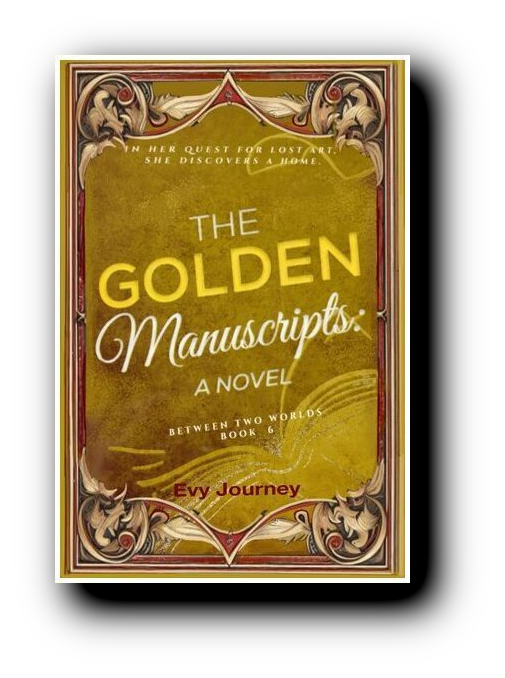

Title: The Golden Manuscripts: A Novel
Author: Evy Journey
Pages: 360
Genre: Historical Fiction/Women's Fiction/Mystery



About the Book:

A young woman of Asian/American parentage has lived in seven different countries and is anxious to find a place she could call home. An unusual sale of rare medieval manuscripts sends her and Nathan—an art journalist who moonlights as a doctor—on a quest into the dark world of stolen art. For Clarissa, these ancient manuscripts elicit cherished memories of children’s picture books her mother read to her, nourishing a passion for art. When their earnest search for clues whisper of old thieves and lead to the unexpected, they raise more questions about an esoteric sometimes unscrupulous art world that defy easy answers. Will this quest reward Clarissa with the sense of home she longs for? This cross-genre literary tale of self-discovery, art mystery, travel, and love is based on the actual theft by an American soldier of illuminated manuscripts during World War II.

Purchase Links:


Read an Excerpt:


November 2000

Rare Manuscripts

I sometimes wish I was your girl next door. The pretty one who listens to you and sympathizes. Doesn’t ask questions you can’t or don’t want to answer. Comes when you need to talk.
She’s sweet, gracious, respectful, and sincere. An open book. Everybody’s ideal American girl.
At other times, I wish I was the beautiful girl with creamy skin, come-hither eyes, and curvy lines every guy drools over. The one you can’t have, unless you’re a hunk of an athlete, or the most popular hunk around. Or you have a hunk of money.
But I’m afraid the image I project is that of a brain with meager social skills. The one you believe can outsmart you in so many ways that you keep out of her way—you know the type. Or at least you think you do. Just as you think you know the other two.
I want to believe I’m smart, though I know I can be dumb. I’m not an expert on anything. So, please wait to pass judgement until you get to know us better—all three of us.
Who am I then?


I’m not quite sure yet. I’m the one who’s still searching for where she belongs.
I’m not a typical American girl. Dad is Asian and Mom is white. I was born into two different cultures, neither of which dug their roots into me. But you’ll see my heritage imprinted all over me—on beige skin with an olive undertone; big grey eyes, double-lidded but not deep-set; a small nose with a pronounced narrow bridge; thick, dark straight hair like Dad’s that glints with bronze under the sun, courtesy of Mom’s genes.
I have a family: Mom, Dad, Brother. Sadly, we’re no longer one unit. Mom and Dad are about ten thousand miles apart. And my brother and I are somewhere in between.
I have no one I call friend. Except myself, of course. That part of me who perceives my actions for what they are. My inner voice. My constant companion and occasional nemesis. Moving often and developing friendships lasting three years at most, I’ve learned to turn inward.
And then there’s Arthur, my beautiful brother. Though we were raised apart, we’ve become close. Like me, he was born in the US. But he grew up in my father’s home city where his friends call him Tisoy, a diminutive for Mestizo that sometimes hints at admiration, sometimes at mockery. Locals use the label for anyone with an obvious mix of Asian and Caucasian features. We share a few features, but he’s inherited a little more from Mom. Arthur has brown wavy hair and green eyes that invite remarks from new acquaintances.
Little Arthur, not so little anymore. Taller than me now, in fact, by two inches. We’ve always gotten along quite well. Except the few times we were together when we were children and he’d keep trailing me, like a puppy, mimicking what I did until I got annoyed. I’d scowl at him, run away so fast he couldn’t catch up. Then I’d close my bedroom door on him. Sometimes I wondered if he annoyed me on purpose so that later he could hug me and say, “I love you” to soften me up. It always worked.
I love Arthur not only because we have some genes in common. He has genuinely lovable qualities—and I’m sure people can’t always say that of their siblings. He’s caring and loyal, and I trust him to be there through thick and thin. I also believe he’s better put together than I am, he whom my parents were too busy to raise.
I am certain of only one thing about myself: I occupy time and space like everyone. My tiny space no one else can claim on this planet, in this new century. But I still do not have a place where I would choose to spend and end my days. I’m a citizen of a country, though. The country where I was born. And yet I can’t call that country home. I don’t know it much. But worse than that, I do not have much of a history there.
Before today, I trudged around the globe for two decades. Cursed and blessed by having been born to a father who was a career diplomat sent on assignments to different countries, I’ve lived in different cities since I was born, usually for three to four years at a time.
Those years of inhabiting different cities in Europe and Asia whizzed by. You could say I hardly noticed them because it was the way of life I was born into. But each of those cities must have left some lasting mark on me that goes into the sum of who I am. And yet, I’m still struggling to form a clear idea of the person that is Me. This Me can’t be whole until I single out a place to call home.
Everyone has a home they’ve set roots in. We may not be aware of it, but a significant part of who we think we are—who others think we are—depends on where we’ve lived. The place we call home. A place I don’t have. Not yet. But I will.
I was three when I left this city. Having recently come back as an adult, I can’t tell whether, or for how long, I’m going to stay. You may wonder why, having lived in different places, I would choose to seek a home in this city—this country as alien to me as any other town or city I’ve passed through.
By the end of my last school year at the Sorbonne, I was convinced that if I were to find a home, my birthplace might be my best choice. I was born here. In a country where I can claim citizenship. Where the primary language is English. My choice avoids language problems and pesky legal residency issues. Practical and logical reasons, I think.


About the Author:


Evy Journey writes. Stories and blog posts. Novels that tend to cross genres. She’s also a wannabe artist, and a flâneuse. Evy studied psychology (M.A., University of Hawaii; Ph.D. University of Illinois). So her fiction spins tales about nuanced characters dealing with contemporary life issues and problems. She believes in love and its many faces. Her one ungranted wish: To live in Paris where art is everywhere and people have honed aimless roaming to an art form. She has visited and stayed a few months at a time.

Author Links:


Evy Journey will giving away nine $25 Amazon Gift Cards & nine boxed sets of the last 3 books in the series, Between Two Worlds! This is the way it works. Evy is touring for 6 months. At the end of each 2 month period she will be giving away 3 $25 Amazon Gift Cards and 3 boxed sets of the last 3 books in the series, Between Two Worlds. You will have a chance to win 3 times during her tour!

Terms & Conditions: By entering the giveaway, you are confirming you are at least 18 years old.
Nine winners will be chosen via Rafflecopter to receive a $25 A
mazon Gift Card and a boxed set of the last 3 books in the series, Between Two Worlds.
This giveaway starts February 5 and ends July 30.
Winners will be contacted via email on March 28, May 31 and July 30.
Winner has 48 hours to reply.

Good luck everyone! 
a Rafflecopter giveaway


Sponsored By:

Monday, August 29, 2022

Book Blitz ~ The Shade Under the Mango Tree by Evy Journey @eholychair ~ @RABTBookTours #RABTBookTours #TheShadeUndertheMangoTree #EvyJourney #LiteraryFiction


The Shade Under the Mango Tree

by Evy Journey

Literary, Contemporary Fiction, Multicultural


photo add-to-goodreads-button_zpsc7b3c634.png


Gold Medal, Contemporary Fiction, 2021 Global Book Awards (formerly New York City Book Awards)

Finalist, 2021 SPR (Self Publishing Review) Book Awards

Finalist, Multicultural Fiction, 2021 International Book Awards


About the Book:

After two heartbreaking losses, Luna wants adventure. Something and somewhere very different from the affluent, sheltered home where she grew up. An adventure in which she can make some difference.

Lucien, a worldly, well-traveled young architect, finds a stranger’s journal at a café. He has qualms and pangs of guilt about reading it. But they don’t stop him. His decision to go on reading changes his life.

Meeting later at a bookstore, Luna is fascinated by Lucien's stories and adventurous spirit. She goes to a rice-growing village in a country steeped in an ancient culture and a deadly history. What she finds there defies anything she could have imagined. Will she leave this world unscathed?

An epistolary tale of courage, resilience, and the bonds that bring diverse people together.


Read an Excerpt:

Prologue


Luna: February, 2016


Ov’s thin upper body is slumped over his crossed legs, his forehead resting on the platform. His brown, wiry arms lie limp, the right one extended forward, hand dangling over the edge of the platform. Dried blood is splattered on his head, and on the collar, right shoulder, and back of his old short-sleeved white shirt.

It seems fitting that he died where he used to spend most of his time when he wasn’t on the rice fields—sitting on a corner of the bamboo platform in the ceiling-high open space under the house. It’s where you get refreshing breezes most afternoons, after a long day of work.

The policeman looks down at Ov’s body as if he’s unsure what to do next. He lays down his camera and the gun in a plastic bag at one end of the platform untainted by splatters of gelled blood.

He steps closer to the body, anchors himself with one knee on top of the platform, and bends over the body. Hooking his arms underneath Ov’s shoulders and upper arms, he pulls the body up, and carefully lays it on its back. He straightens the legs.

He steps off the platform. Stands still for a few seconds to catch his breath. He turns to us and says, “It’s clear what has happened. I have all the pictures I need.”

 He points to his camera, maybe to make sure we understand. We have watched him in silence, three zombies still in shock. Me, standing across the bamboo platform from him. Mae and Jorani sitting, tense and quiet, on the hammock to my left.

Is that it? Done already? I want to ask him: Will he have the body taken away for an autopsy? I suppose that’s what is routinely done everywhere in cases like this. But I don’t know enough Khmer.

As if he sensed my unspoken question, he glances at me. A quick glance that comes with a frown. He seems perplexed and chooses to ignore me.

He addresses the three of us, like a captain addressing his troop. “You can clean up.”

The lingering frown on his brow softens into sympathy. He’s gazing at Jorani, whose mournful eyes remain downcast. He looks away and turns toward Mae. Pressing his hands together, he bows to her. A deeper one than the first he gave her when she and Jorani arrived.

He utters Khmer words too many and too fast for me to understand. From the furrowed brow and the look in his eyes, I assume they are words of sympathy. He bows a third time, and turns to go back to where he placed the gun and camera. He picks them up and walks away.

For a moment or two, I stare at the figure of the policeman walking away. Then I turn to Jorani. Call him back. Don’t we have questions? I can ask and you can translate, if you prefer. But seeing her and Mae sitting as still and silent as rocks, hands on their laps, and eyes glazed as if to block out what’s in front of them, the words get trapped in my brain. Their bodies, rigid just moments before, have gone slack, as if to say: What else can anyone do? What’s done cannot be undone. All that’s left is to clean up, as the policeman said. Get on with our lives.

My gaze wanders again toward the receding figure of the policeman on the dirt road, the plastic bag with the gun dangling in his right hand. Does it really matter how Cambodian police handles Ov’s suicide? I witnessed it. I know the facts. And didn’t I read a while back how Buddhism frowns upon violations on the human body? The family might object against cutting up Ov—the way I’ve seen on TV crime shows—just to declare with certainty what caused his death.

I take in a long breath. I have done all I can and must defer to Cambodian beliefs and customs.

But I can’t let it go yet. Ov chose to end his life in a violent way and I’m curious: Do the agonies of his last moments show on his face? I steal another look.

All I could gather, from where I stand, is life has definitely gone out of every part of him. His eyes are closed and immobile. The tic on his inanimate cheeks hasn’t left a trace. The tic that many times was the only way I could tell he had feelings. Feelings he tried to control or hide. Now, his face is just an expressionless brown mask. Maybe everyone really has a spirit, a soul that rises out of the body when one dies, leaving a mansize mass of clay.

I stare at Ov’s body, lying in a darkened, dried pool of his own blood, bits of his skull and brain scattered next to his feet where his head had been. At that moment, it hits me that this would be the image of Ov I will always remember. I shudder.

My legs begin to buckle underneath me and I turn around, regretting that last look. With outstretched hands, I take a step toward the hammock. Jorani rises to grab my hands, and she helps me sit down next to Mae.

Could I ever forget? Could Mae and Jorani? Would the image of Ov in a pool of blood linger in their memories like it would in mine?

I know I could never tell my parents what happened here this afternoon. But could I tell Lucien? The terrible shock of watching someone, in whose home I found a family, fire a gun to his head? And the almost as horrifying realization—looking back—that I knew what he was going to do, but I hesitated for a few seconds to stop him.


About the Author:

Evy Journey writes. Stories. Blogs (three sites). Cross-genre novels. She’s also a wannabe artist, and a flâneuse (an ambler).

Evy studied psychology ( Ph.D. University of Illinois) initially to help her understand herself and Dostoevsky. Now, she spins tales about multicultural characters dealing with the problems and issues of contemporary life. She believes in love and its many faces.

Just as she has crossed genres in writing fiction, she has also crossed cultures, having lived and traveled in various cities in different countries. Find her thoughts on travel, art, and food at Artsy Rambler (https://eveonalimb2.com).


Contact  Links:

Website

Twitter

Facebook

GoodReads

BookBuzz


Purchase Links:

Amazon

B&N

Kobo

iBooks


RABT Book Tours & PR

Friday, August 20, 2021

Book Blitz ~ The Shade Under the Mango Tree by Evy Journey ~ Multicultural Contemporary Fiction


The Shade Under the Mango Tree 
by Evy Journey

Multicultural Contemporary Fiction

Publisher: Sojourner Books

About the Book:

After two heartbreaking losses, Luna wants adventure. Something and somewhere very different from the affluent, sheltered home where she grew up. An adventure in which she can make some difference.

Lucien, a worldly, well-traveled young architect, finds a stranger’s journal at a café. He has qualms and pangs of guilt about reading it. But they don’t stop him. His decision to go on reading changes his life.

Months later, they meet at a bookstore. Fascinated by his stories and adventurous spirit, Luna goes to a rice-growing village in a country steeped in an ancient culture and a deadly history. What she finds there defies anything she could have imagined. Will she leave this world unscathed?

An epistolary tale of courage, resilience, and the bonds that bring diverse people together.

Praise for The Shade Under The Mango Tree:

Gold Medal, Contemporary Fiction, 2021 Global Book Awards (formerly New York City Book Awards)

Finalist, Multicultural Fiction, 2021 International Book Awards

"A dazzling, globe-spanning tale. In a beautiful way, the story explores how powerful connections can be born at a distance. The storyline is rich, with authentic emotional struggles and believable relationships. Throughout, simple, evocative language and bold descriptions are intermingled with flashes of poetic imagery. Aided by strong thematic undertones, subtle symbolism, high stakes and an ultimately hopeful narrative voice, Evy Journey has delivered a captivating story." -- Self-Publishing Review

"...one of the most beautiful books I've read in a long time. Emotive, gripping and sweeping... a tale I will remember for a long time." -- International Review of Books

"... a beautifully-written, marvelous story of two people discovering their emotions and learning to trust each other." -- San Francisco Book Review

"... a tender and captivating story that delves into the many existential questions we ask ourselves frequently... with a nuanced understanding of different cultures backed by a worldly sensibility of travel, poetry, and design. The prose reads like a painting adding depth and complexity, making for some beautiful imagery." -- Reedsy Discovery

"This emotional story, with its clear prose and crisp dialogue, will appeal to those who enjoy romantic literature and are not afraid to engage with the ugliness of the real world. Journey's three-dimensional, well-developed characters carry this appealing story of building new bonds in the midst of loss and heartache. Great for fans of: Nora Roberts, Nicholas Sparks." -- Booklife Review


Read an Excerpt:

Prologue

Ov’s thin upper body is slumped over his crossed legs, his forehead resting on the platform. His brown, wiry arms lie limp, the right one extended forward, hand dangling over the edge of the platform. Dried blood is splattered on his head, and on the collar, right shoulder, and back of his old short-sleeved white shirt.

It seems fitting that he died where he used to spend most of his time when he wasn’t on the rice fields—sitting on a corner of the bamboo platform in the ceiling-high open space under the house. It’s where you get refreshing breezes most afternoons, after a long day of work.

The policeman looks down at Ov’s body as if he’s unsure what to do next. He lays down his camera and the gun in a plastic bag at one end of the platform untainted by splatters of gelled blood.

He steps closer to the body, anchors himself with one knee on top of the platform, and bends over the body. Hooking his arms underneath Ov’s shoulders and upper arms, he pulls the body up, and carefully lays it on its back. He straightens the legs.

He steps off the platform. Stands still for a few seconds to catch his breath. He turns to us and says, “It’s clear what has happened. I have all the pictures I need.”

He points to his camera, maybe to make sure we understand. We have watched him in silence, three zombies still in shock. Me, standing across the bamboo platform from him. Mae and Jorani sitting, tense and quiet, on the hammock to my left.

Is that it? Done already? I want to ask him: Will he have the body taken away for an autopsy? I suppose that’s what is routinely done everywhere in cases like this. But I don’t know enough Khmer.

As if he sensed my unspoken question, he glances at me. A quick glance that comes with a frown. He seems perplexed and chooses to ignore me.

He addresses the three of us, like a captain addressing his troop. “You can clean up.”

The lingering frown on his brow softens into sympathy. He’s gazing at Jorani, whose mournful eyes remain downcast. He looks away and turns toward Mae.

Pressing his hands together, he bows to her. A deeper one than the first he gave her when she and Jorani arrived.

He utters Khmer words too many and too fast for me to understand. From the furrowed brow and the look in his eyes, I assume they are words of sympathy. He bows a third time, and turns to go back to where he placed the gun and camera. He picks them up and walks away.

For a moment or two, I stare at the figure of the policeman walking away. Then I turn to Jorani. Call him back. Don’t we have questions? I can ask and you can translate, if you prefer. But seeing her and Mae sitting as still and silent as rocks, hands on their laps, and eyes glazed as if to block out what’s in front of them, the words get trapped in my brain. Their bodies, rigid just moments before, have gone slack, as if to say: What else can anyone do? What’s done cannot be undone. All that’s left is to clean up, as the policeman said. Get on with our lives.

My gaze wanders again toward the receding figure of the policeman on the dirt road, the plastic bag with the gun dangling in his right hand. Does it really matter how Cambodian police handles Ov’s suicide? I witnessed it. I know the facts. And didn’t I read a while back how Buddhism frowns upon violations on the human body? The family might object against cutting up Ov—the way I’ve seen on TV crime shows—just to declare with certainty what caused his death.

I take in a long breath. I have done all I can and must defer to Cambodian beliefs and customs.

But I can’t let it go yet. Ov chose to end his life in a violent way and I’m curious: Do the agonies of his last moments show on his face? I steal another look.

All I could gather, from where I stand, is life has definitely gone out of every part of him. His eyes are closed and immobile. The tic on his inanimate cheeks hasn’t left a trace. The tic that many times was the only way I could tell he had feelings. Feelings he tried to control or hide. Now, his face is just an expressionless brown mask. Maybe everyone really has a spirit, a soul that rises out of the body when one dies, leaving a mansize mass of clay.

I stare at Ov’s body, lying in a darkened, dried pool of his own blood, bits of his skull and brain scattered next to his feet where his head had been. At that moment, it hits me that this would be the image of Ov I will always remember. I shudder.

My legs begin to buckle underneath me and I turn around, regretting that last look. With outstretched hands, I take a step toward the hammock. Jorani rises to grab my hands, and she helps me sit down next to Mae.

Could I ever forget? Could Mae and Jorani? Would the image of Ov in a pool of blood linger in their memories like it would in mine?

I know I could never tell my parents what happened here this afternoon. But could I tell Lucien?

The terrible shock of watching someone, in whose home I found a family, fire a gun to his head? And the almost as horrifying realization—looking back—that I knew what he was going to do, but I hesitated for a few seconds to stop him.

About the Author:

Evy Journey writes. Stories and blog posts. Novels that tend to cross genres. She’s also a wannabe artist, and a flâneuse.

Evy studied psychology (M.A., University of Hawaii; Ph.D. University of Illinois). So her fiction spins tales about nuanced characters dealing with contemporary life issues and problems. She believes in love and its many faces.

Her one ungranted wish: To live in Paris where art is everywhere and people have honed aimless roaming to an art form. She has visited and stayed a few months at a time.

Contact Links:

Website

Twitter

Facebook

BookBub

LinkedIn

Promo Link


Purchase Links

Amazon

B&N

Kobo

iBooks

Smashwords


RABT Book Tours & PR