Showing posts with label Historical Crime Fiction. Show all posts

Friday, February 28, 2025

You Will Know Me by My Deeds by Mike Cobb ~ Historical Crime Fiction ~ @partnersincr1me @mgcobb

YOU WILL KNOW ME BY MY DEEDS

by Mike Cobb

February 24 - March 21, 2025 Virtual Book Tour

About the Book:

You Will Know Me by My Deeds by Mike Cobb

Billy Tarwater thought he had left the troubled past behind, until a series of ominous incidents threaten to destroy everything he and his wife hold dear.

Someone is out to get them, and he is determined to uncover the truth before it’s too late. But as he delves deeper into the mystery, he realizes that the dark forces at play may be connected to the events of seventeen years ago.

And to the Atlanta Child Murders.

Join him on a heart-pounding journey of suspense and intrigue as he navigates the dangerous waters of his past and fights to protect the ones he loves.

In a race against an unknown enemy, Billy must confront his darkest fears. Will he be able to uncover the truth before it’s too late, or will he and his wife become victims of the sinister forces at play?

Praise for You Will Know Me by My Deeds:

"Mike Cobb’s You Will Know Me by My Deeds is a taut, propulsive tale set against the harrowing backdrop of the 1980’s Atlanta Child Murders. Entertainingly addictive and menacing."
~ Robert Gwaltney, award-winning author of The Cicada Tree and Georgia Author of the Year

"Mike Cobb's Atlanta-based historical fiction easily holds its place on the bookshelf next to Caleb Carr’s Alienist novels."
~ Joey Madia, author of Sherlock Holmes and the Mystery of M and the Stanton Chronicles historical fiction series

"Mike Cobb’s enthralling and meticulously-researched mystery, You Will Know Me by My Deeds, sets a lofty standard for contemporary thrillers. Set in the heart of the ‘new’ south, Cobb’s vividly-wrought tale propels his readers through the tumult of an era and illuminates race relations at a difficult moment in Atlanta’s modern history. Grab this book for a satisfying and uplifting read."
~ Steve Klein, Civil Rights Activist

"I couldn’t put this book down and had to finish it in one sitting! Once again Mike Cobb has crafted a plausible story with strong characters, a sense of place, and rich historical detail regarding a tragic chapter of my beloved Atlanta’s history – the missing and murdered children from 1979 to 1981."
~ Lisa Land Cooper, Author and Historian

"Mike Cobb’s prose is powerful, and his plot is dark, complex and full of surprises. You will find a rich, earthy view of old Atlanta complete with all its beauty, weaknesses and the diverse attitudes of the Old South."
~ Jeff Shaw, author of Who I Am; The Man Behind the Badge and Lieutenant Trufant

"A bracing historical thriller that further enriches this top-notch series."
~ Kirkus Reviews

"This is an excellent book with an engaging mystery and an intriguing conclusion. It’s clear that research is paramount to Mike Cobb’s writing. I could really identify with how he wove true crimes into this fictional one. I look forward to reading more from him."
~ Ed Begley Jr., Award-winning actor, producer, environmental activist, and author of To the Temple of Tranquility…and Step On It!: A Memoir

Watch the You Will Know Me by My Deeds Trailer:

Book Details:

Genre: Historical Crime Fiction
Published by: Waterside Production
Publication Date: January 2025
Number of Pages: 444
ISBN: 978-1962984720
Series: Sequel to The Devil You Knew
Book Links: Amazon | Barnes & Noble | Goodreads

Read an Excerpt:

Chapter One

Cynthia Tarwater

Monday, December 14th, 1981

Two blurred headlights, ragged halos in the rearview, broke the Stygian pitch.

Cynthia gripped the steering wheel so hard her knuckles blanched.

The rain cascaded down the windshield in gelid sheets. The wiper blades thwacked the edge of the Suburban’s cowl like a metronome.

For the past twenty-four hours, Atlanta had been beset by a heavy downfall and scant visibility.

She struggled to make out the road ahead.

For the first five minutes of the drive, Billy Jr. and Addie had jabbered away in the back seat like sugar-high Energizer Bunnies. Then they sank into oblivion. Just like that, she thought. Nothing like a weekend sleepover at Grandma Alice’s to wear the kids out.

She stopped at the intersection of Flat Shoals and Glenwood. The barbershop to her left was long gone, a victim of white flight, its plate glass windows boarded up with fly-posted plywood. She could almost hear the snip snip of Mr. Batson’s clippers beckoning from yore. The snap of Sam Jepperson’s shoeshine cloth beseeching a generous tip. The redolence of Bay Rum and Kiwi polish. Not that she ever got her hair cut—or her shoes shined—there. But her father Cecil dragged her along on more than one occasion with the promise that they’d go next door for a vanilla shake if only she’d sit like a “good girl” and watch him get trimmed. She had often wondered whether he did things like that just to piss her off. His way of controlling. Or did he really want her company?

The car that had been following her since she pulled out of Billy’s mother’s driveway lingered half a block behind. When the light changed, she turned left onto Glenwood. She looked in the mirror. The car turned left and kept its distance. Probably nothing.

At the Gresham Avenue intersection, she glanced over at what had been Harry’s Army Surplus. Now, like the barbershop, just another padlocked casualty.

A long-suppressed memory welled up. Saturday, September 28th, 1963. She was thirteen. So capricious and carefree, like most girls her age. She left the East Atlanta Pharmacy by the front door and headed west toward Moreland Avenue. Just past Harry’s, she looked back and saw a car following her. When she stopped, it stopped. When she went, it went.

That had been her last recollection from before the erasure—what she later came to know by its medical name. Localized psychogenic amnesia. For seventeen years, the next thing she had remembered was waking up at Grady Hospital with an officer standing guard outside her door. The nurse had said You’re not Cynthia now. You’re Patti. With an i. Or something to that effect. She would later learn that the police had contrived the alias to protect her from her abductor.

It wasn’t until October a year ago that everything began coming back to Cynthia in a torrent. What had been an eradication of five weeks of her past, leaving in its wake a deep, dark abyss, had begun to come back in a matter of days. This wouldn’t have happened without Billy’s help. And his dogged determination.

Did she welcome the recovered memory? There were times when she wondered whether knowing was better than incognizance. Closure would feel right. But knowledge alone doesn’t bring closure.

And could closure ever come for the families of the girls who didn’t survive? Why had she made it out alive, and the others hadn’t?

She inched her way down Glenwood past Moreland Avenue. At the Boulevard intersection, she glanced across the street at Fire Station No. 10. A half dozen firemen were huddled under the overhang in front of the station. For a moment, she thought she saw Billy’s brother Chester standing there smoking a cigarette and chatting up the others. But Chester hadn’t lasted a year as a fireman before bugging out for the merchant marines, thinking he could avoid the draft. He ended up on the SS Mayaguez ferrying supplies through combat zones in Vietnam. Came home intact but with a chip on his shoulder.

She turned right.

She drove up Boulevard past Memorial Drive, hugging the eastern edge of Oakland Cemetery before assuming a northwesterly course past the shuttered Fulton Cotton Mill and through the railroad underpass.

She looked back. The car continued to follow her. That’s when she realized that it wasn’t nothing.

Perhaps she should have taken the expressway. But she had chosen not to. Visibility was bad enough on the surface roads.

As she neared the intersection with Ponce de Leon, the light turned yellow. She accelerated and took a hard left, hoping the car would stop on red. It didn’t. When she turned right on Peachtree, then left on Fifth, the driver continued to dog her.

Cynthia eased into The Belmont courtyard. The other car stopped briefly at the turn-in then crept down Fifth. She craned her neck, trying to get a good look at it. At the driver. But she could see little through the relentless downpour and the fogged windshield.

She parked the Suburban at The Belmont entrance. She waited for the rain to abate enough for her to get the kids inside without a drenching. Then she hurried them into the lobby under her flimsy throwaway umbrella made for one.

She closed the umbrella and hooked it on her wrist. She held Billy Jr. and Addie’s hands tight, lest they slip on the marble floor.

They crossed the threshold into the elevator cab, leaving a trail of dripping water behind. She punched 4.

When the doors opened, Billy was standing in the fourth-floor vestibule. He was in his light beige mackintosh and floppy yellow rain hat.

“Clairvoyant, are we?” Cynthia said.

“I saw you out the window and was on my way down to help. But you beat me to it.” He placed his hand on her upper arm. “Cynthia, you’re trembling.”

“It’s just the biting cold. I’m fine. I need to get these rug rats out of their wet clothes and into their PJs. And then sit for a while. You can park the car if you don’t mind.”

“Of course I don’t mind. That’s the least I can do.”

She held out the umbrella. “Want this?”

“No thanks.” He knelt in front of Billy Jr. and Addie. “How’s Grandma?”

“Feisty as ever,” Cynthia answered. “She sure knows how to cut a look. But the kids adore her, and that’s what matters most. And compared to my mother…let’s just say you’re the lucky one and leave it at that.”

When Billy returned, Cynthia was already curled up in her favorite overstuffed chair with a glass of Merlot. Her socks and Clarks slip-ons lay pell-mell on the floor about her. The open umbrella stood atilt in the corner of the room.

“That was quick,” he said.

She took a sip. Notes of black cherry, of vanilla and sandalwood, teased her throat. “I’m sure the kids are deep into sugar-plum dreams by now. Grab a pour and join me. There’s something you need to know.”

Billy, glass in hand, plopped into the chair beside her. “What is it?”

“I need to tell you about a flashback I had. And about a car.”

He listened as Cynthia told him about the car that had followed her from his mother’s house. “Could you tell what kind it was?” he asked.

“I couldn’t tell a thing, Billy.” She ran her finger along the chair’s piping, tracing in her mind the path she had taken. “All I know is it looked big. Maybe a sedan.”

“I don’t think you should be out late at night by yourself, Cynthia. It seems like every day more shit happens. Carjackings. Murders.”

“At least Wayne Williams is locked up.” She searched her thoughts. “Those poor children. And their grieving families.”

Billy’s hesitation baffled her. He just sat there for a minute without saying a word. He finally spoke. “Tell me about the flashback.”

“The whole thing with the kidnapping came rushing back tonight. It hit me hard, just as I passed the old army surplus. I guess it was my being right there where my thirteen-year-old self had been lured away.” She held her glass in the air. “More, please.”

He refilled it and topped his off. He set the bottle on the side table, leaned over, and took her hand. “I’m so sorry, Cynthia.”

“It wasn’t what I expected. I thought I had finally put it all behind me, with Kilgallon…excuse me, the Reverend Kilgallon…dead and Sam Jepperson exonerated and freed. But now I’m not so certain. Maybe it’ll haunt me forever.”

“I hope not. I just wish there was something I could do to make things better.”

“I’ll be okay.”

“Are you sure?”

“I’m sure. Life goes on, doesn’t it? And I don’t believe I have a choice in the matter.”

***

Excerpt from You Will Know Me by My Deeds by Mike Cobb. Copyright 2025 by Mike Cobb. Reproduced with permission from Mike Cobb. All rights reserved.


Meet the Author:

Mike Cobb

Mike’s body of literary work includes both fiction and nonfiction, short-form and long-form, as well as articles and blogs. He is the author of three published novels, Dead Beckoning, The Devil You Knew, and its sequel You Will Know Me by My Deeds. His fourth novel, Muzzle the Black Dog, a novella, is scheduled for release in May 2025. He is also working on Kathleen, a fictionalized account of a cold case murder from 1970.

While he is comfortable playing across a broad range of topics, much of his focus is on true crime, crime fiction, and historical fiction. Rigorous research is foundational to his writing. He gets that honestly, having spent much of his professional career as a scientist.

A native of Atlanta, Mike splits his time between Midtown Atlanta and Blue Ridge, Georgia.

Catch Up With Mike Cobb:
www.MikeCobbWriter.com
Amazon Author Profile
Goodreads
BookBub - @cobbmg1
Instagram - @cobbmg
YouTube - @mikecobbwriter
X - @mgcobb
Facebook - @MGCobbWriter
LinkedIn - @mgcobb


Tour Participants:

Visit these other great hosts on this tour for more great reviews, interviews, guest posts, and opportunities to WIN in the giveaway!

Click here to view the Tour Schedule


ENTER FOR A CHANCE TO WIN:

This is a giveaway hosted by Partners in Crime Tours for Mike Cobb. See the widget for entry terms and conditions. Void where prohibited.

Can't see the giveaway? Click Here!


Get More Great Reads at Partners In Crime Tours


Saturday, June 8, 2024

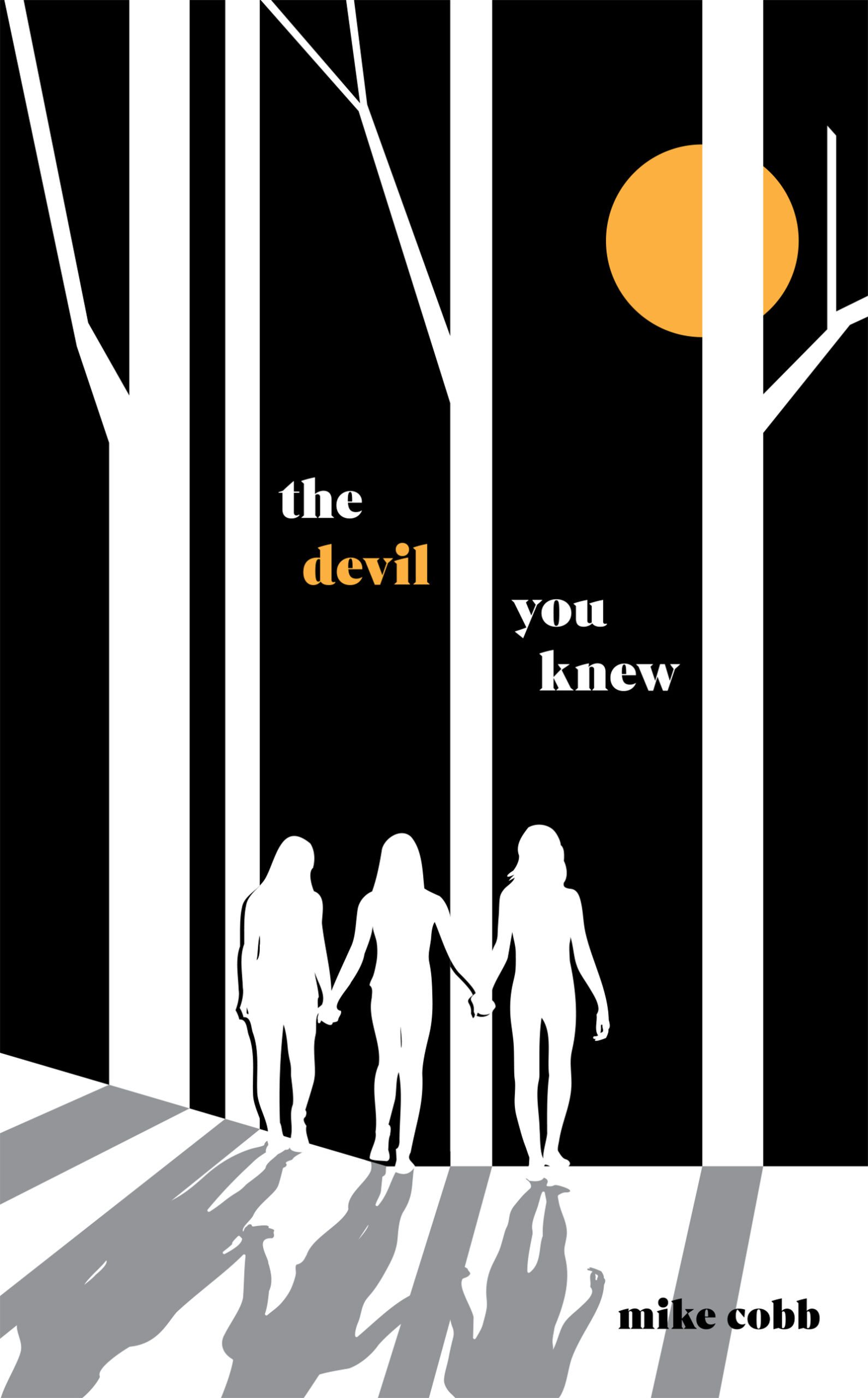
The Devil You Knew by Mike Cobb ~ @mgcobb @partnersincr1me ~ Historical Crime Fiction

THE DEVIL YOU KNEW

by Mike Cobb

June 3 - 28, 2024 Virtual Book Tour

About the Book:

The Devil You Knew by Mike Cobb

Atlanta. 1963.

Three adolescent girls go missing. And a killer is on the loose.

Young Billy Tarwater, eleven years old at the time and infatuated with one of the girls, thirteen-year-old Cynthia Hudspeth, finds himself caught up in the drama and suspense of the kidnappings.

Fast forward to 1980. Tarwater, now an up-and-coming newspaperman, sets out to find the killer and free an innocent victim of injustice.

THE DEVIL YOU KNEW masterfully combines coming-of-age poignancy with the cliffhanging suspense of a noir thriller.

The reader is taken on a journey of twists and turns to an unexpected end.

Praise for The Devil You Knew:

"A sinister, masterfully penned drama. Supported by a rich cast of three-dimensional characters, a host of red herrings, and a looming suspicion that readers have known the culprit all along, this is a powerfully written thriller. Cobb has constructed a complex procedural mystery with poignant historical accuracy, never letting readers forget about the timeless issues at the novel's core, resulting in a dark and enthralling historical thriller."
~ Self-Publishing Review, ★★★★½

"A dynamic cast drives this striking, historically rich crime thriller."
~ Kirkus Reviews (Recommended Book)

Book Details:

Genre: Historical Crime Fiction
Published by: Indie
Publication Date: September 1, 2022
Number of Pages: 480
ISBN: 9780578371436 (ISBN10: 057837143X)
Book Links: Amazon | Barnes & Noble | BookShop.org | Goodreads

Read an Excerpt:

Chapter One

I, Billy Tarwater
1963

“Won’t you come.”

The Reverend Virlyn Kilgallon’s baritone reverberated in a thunderous cannonade, his voice at once magisterial and dark. The altar call always came at the end, when the congregants were sufficiently energized by his twenty-five minutes of prophecy and supplication. The sermon was timed with precision. I know because I clocked it with my Caravelle self-winding, a gift from my Granddaddy Parker.

The year was 1963. I was a tow-headed eleven year old, not quite ready to make the lonely walk to the chancel rail, but old enough to feel pangs of guilt, accompanied by a generous dollop of fear. Looking back, I now understand that my anxiety was borne of both a dread of the curtain-cloaked water vessel behind the choir loft and a sense that I was missing out on something big.

Was there some great, liberating secret lurking behind the curtain––a secret shared only by members of the club, manifest in a covert handshake or a knowing back-channel glance––a secret that I dared not ponder until I made The Walk myself? The Walk. The dreaded Walk. Each Sunday I would steel myself and stand on the edge of the precipice. But every time, I would throttle. Back away. No, not yet. Not ready. Not today. Maybe next week.

What lies behind the curtain carries great weight, conjuring all sorts of images, both good and bad, hopeful and foreboding. But more often than not, when the curtain is finally drawn back, the ordinary, the mundane, dispels any notion of mystery. Pay no attention to that man behind the curtain, the Wizard said. A part of me yearned to ignore the Wizard––to throw open

the faux velvet. But another part of me reveled in the impenetrable mystery.

My ignore-the-Wizard self would sometimes conjure memories of the fourth grade experience at the Nathan B. Forrest Elementary School, a two-story red brick on the edge of my neighborhood, around the corner from the public library and Fire Station No. 13, and a block away from the A&P. Downstairs were K through 3, upstairs 4 through 7 (we didn’t have middle school back then). In ’60, as a third grader, I had never been upstairs. We of the lower classes were forbidden to make the journey to the upper reaches––our day would come, we were told. The two fourth grade teachers, Misses Throckmorton and Sexton, both spinsters, looked––to my eight-year-old eyes––to have been at least a hundred, maybe a hundred and one. In the minds of all of us third graders, they were the oldest, meanest creatures we’d ever known. We feared what lay ahead for us next year. And believe me, the images we concocted were not pretty. But then, when we finally made it to the top, we learned that upstairs was really no different from downstairs––just a little more worldly, a little more challenging. And Miss Throckmorton, my teacher, was an innocent compared to the ogre I had imagined. I should have learned a lesson from that.

The liturgical plunging into the depths at the hand of the reverend––there wasn’t much to it, really, as I would later find out.

* * *

“Won’t you come.”

We always sat in the second pew from the front, in the very center, facing the reverend head-on so that, when he proclaimed the inerrant word of God, we would be assured he was speaking directly to us, as if we were the only souls in the room. I would be flanked by

Grandmother Tarwater on my left and my mother on my right. My brother Chester would be somewhere in the balcony, where the teenagers sat, surely to enjoy some semblance of privacy for whatever-they-did-up-there. It was only on the rarest occasion that my father would grace us with his presence, even though it was his mother who sat beside me and who would, on occasion, retrieve a stick of Doublemint gum from her purse and slip it to me when her daughter-in-law wasn’t looking. I can still remember the pear green packaging with its dark green and white logo. Her beam of diabolical satisfaction as she surreptitiously passed it. The double-strength peppermint juice coated my tongue and drifted down my throat. Somehow, that seemingly simple indulgence allayed the discomfort of my bony frame against the hard mahogany surface (I was skinny back then––would that I could recapture that aspect of my youth), the cold clime of the sanctuary, the jarring from the sermon that, as it went on, bore more opprobrium than good news.

* * *

I wasn’t Billy back then. I was Binky. Not a nickname I would have enthusiastically chosen. But it was given to me when I was much younger and, to my abiding chagrin, it stuck. The name had nothing to do with pacifiers, by the way––I’m told I would puff my cheeks and eject the tasteless abomination, formed of rubber and plastic, across the room whenever my mother tried to force it on me––a poor excuse for the real thing, I must have thought. Rather, the moniker had derived from my odd habit as a tot, hopping restlessly, doing a little twist, and sticking my backside in the air like a lapine doe in heat. Anyway, the nickname stuck, and I lived with it until the age of twelve-and-a-half, at which time Binky left home for good and Billy arrived, standing at the door, shuffling back and forth, raring to be let in.

* * *

“Raise a hand. I see your hand…and your hand…and your hand.”

I would sit on that cold, hard bench and watch the hands go up throughout the congregation. Some old and wrinkled. Some young and firm. Some worn and calloused. Some pale and smooth like mine. Within minutes, most of the fold would have both hands in the air, waving them back and forth and beckoning the firmament.

“Now rise before God.”

My grandmother would reach down and pull me up by my bony elbow as she leapt from her seat. My mother followed suit. The entire congregation stood before the reverend and swayed like a mighty wind casting back and forth on a restless sea.

“Won’t you come. Your name was written in the Lamb’s Book of Life. Show Him you love Him. Confess before all.” He swept his hand across the room in a wide arc. “And you. You who have not found Him. Will this be the day you cross the line of faith?”

The choir would open up with the invitational hymn, their sotto voce voices gradually rising to a crescendo that rattled the twelve-station stained glass windows along the side walls of the sanctuary. On Christ the solid Rock I stand. All other ground is sinking sand.

One by one, damned near half the flock would leave their rows, sidle gingerly in front of their more reluctant pewmates to the aisle, and promenade to the chancel rail, their hands clasped before them or, on occasion, still raised in the air. One or two of the petitioners my age or a year or so older would profess his or her lust to be gulfed in that big, awesome tank of water. The occasional adult, finding himself having reached maturity without knowing God’s salvation, would plea for the gift of immersion, tears streaming down his cheeks.

My grandmother would sashay to the front of the sanctuary, a queen pink lace handkerchief held tight in her hand. My mother would follow. I would sit alone, with my palms flat against the seat, my thumbs and forefingers slightly under my scrawny thighs, wondering when I would be ready to make The Walk, stand before the congregants who would have chosen on that particular Sunday to remain in the pews, and profess my love of the Almighty, praise be.

At the time, I reckoned that all Southern Baptist churches behaved like my grandmother’s. I would later learn that some preachers assumed God didn’t require multiple trips to the rail––one profession of faith, followed shortly thereafter by the dunk in the tub, was sufficient. But not Virlyn Kilgallon. He expected it every Sunday––I once heard him refer to it as “hitting the sawdust trail,” something about a reference to tent revivals. But thank God he didn’t require multiple dips in the bath. Otherwise, we would have been in church all day on baptism Sundays.

* * *

When the altar call was not afoot, I amused myself in assorted ways, some harmless, some not so much. My diversions of the latter kind shall remain, at least for the time being, unadvertised. But they often involved some clandestine desecration of the hymnal pages. As for the former, my favorite distraction involved carefully examining the odd members of that motley group that called themselves a choir, for whom I made up aliases. There was No Neck Nancy––the woman (she must have been in her early thirties) whose head literally sat smack-dab on her shoulders with nothing in between. Whenever she wanted to look to the right or the left she had to turn her entire body. I now know the malady for what it is, or was (I have no idea where she is today or, for that matter, whether she is anywhere)––Klippel-Feil syndrome. But at the time, she was just one more freak, likely having escaped from a carnival midway somewhere. And there was See Me Sylvia. My grandmother claimed she came to church primarily for one reason––to show off her fancy hats and jewelry––but there didn’t seem to be much there worth flaunting. Launchpad Leonard would, out of the blue, produce the loudest, most explosive belch you’d ever heard––so loud, in fact, that it sounded like one of those Atlas rockets blasting off from Cape Canaveral. And whenever I saw him do it outside the choir loft without his robe, his quaking beer belly spilling over his belt buckle, my first instinct was to run for my life.

How would I have survived Sunday mornings without diversions? My brother, perched high above the sanctuary floor in the balcony with his friends, no doubt had his own amusements. More than once, I suspected him of sneaking out of the church just as the service began, sitting in the back seat of the Brookwood Wagon reading Mad Magazine, only to scurry back in a few minutes prior to the service’s ending so he could walk out with the rest of the assembly and my mother would be none the wiser.

* * *

Almost every Sunday, Reverend Kilgallon’s mien and comportment would take a bleak and sinister turn about halfway through the sermon. It was as if he became a different man altogether. Not the paternalistic pastor calling his flock to salvation, but, rather, a demonic, truculent savage condemning all in his presence to a life of eternal damnation.

I would always see it coming. He would remove his wire-rimmed bifocals and whack them onto the lectern––I awaited some Sunday when he would send shards flying across the room. His face would redden. The veins in his temples would pulse. A curious tic would come upon him––an emergent twitching around his right eye. Then he would let loose, pointing to the

balcony and setting free a stentorian roar. “Sinners all. The whole vile lot of you. You will roast in Hell––like sizzling bacon at the men’s fellowship breakfast.” (Okay, he didn’t really say that last part about the bacon––I made that up––but the thought may have crossed his mind.) Then he would turn on the assembly at large, sweeping his finger across the room and damning every single one of us.

An electric charge would run down my spine as if I had been sitting on metal, rather than mahogany, and the Almighty Himself had let loose a bolt of lightning onto the church. I would give a little shake and look back at the balcony.

Is my brother up there? Or is he in the station wagon, reading The Lighter Side or Spy vs. Spy, oblivious to the judgment, the condemnation, that has just been leveled on him?

On all of us.

***

Excerpt from THE DEVIL YOU KNEW by Mike Cobb. Copyright 2024 by Mike Cobb. Reproduced with permission from Mike Cobb. All rights reserved.


Meet the Author:

Mike Cobb

Mike's body of work includes both fiction and nonfiction, short form and long form, as well as articles and blogs of literary interest.

While he is comfortable playing across a broad range of genres, much of his focus is on historical fiction, crime fiction, and true crime. Rigorous research is foundational to his writing. He gets that honestly, having spent much of his professional career as a scientist.

Mike splits his time between midtown Atlanta and a lake in the North Georgia mountains, far away from the rat race of the city. The balance between city life and mountain life inspires his writing.

Catch Up With Mike Cobb:
mikecobbwriter.com
Goodreads
Instagram - @cobbmg
Twitter/X - @mgcobb
Facebook - @MGCobbWriter


Tour Participants:

Visit these other great hosts on this tour for more great reviews, interviews, guest posts, and opportunities to WIN in the giveaway!


Don't Miss Your Chance to Win! Enter Today!

This is a giveaway hosted by Partners in Crime Tours for Mike Cobb. See the widget for entry terms and conditions. Void where prohibited.


Get More Great Reads at Partners In Crime Tours


Sunday, August 22, 2021

The Murderess Must Die by Marlie Parker Wasserman ~ #Giveaway ~ Historical Crime Fiction ~ @MarlieWasserman @partnersincr1me

The Murderess Must Die

by Marlie Parker Wasserman

August 16 - September 10, 2021 Tour

On a winter day in 1898, hundreds of spectators gather at a Brooklyn courthouse, scrambling for a view of the woman they label a murderess. Martha Place has been charged with throwing acid in her stepdaughter’s face, hitting her with an axe, suffocating her with a pillow, then trying to kill her husband with the same axe. The crowd will not know for another year that the alleged murderess becomes the first woman in the world to be executed in the electric chair. None of her eight lawyers can save her from a guilty verdict and the governor of New York, Theodore Roosevelt, refuses to grant her clemency.

Was Martha Place a wicked stepmother, an abused wife, or an insane killer? Was her stepdaughter a tragic victim? Why would a well-dressed woman, living with an upstanding husband, in a respectable neighborhood, turn violent? Since the crime made the headlines, we have heard only from those who abused and condemned Martha Place.

Speaking from the grave she tells her own story, in her own words. Her memory of the crime is incomplete, but one of her lawyers fills in the gaps. At the juncture of true crime and fiction, The Murderess Must Die is based on an actual crime. What was reported, though, was only half the story.

Praise for The Murderess Must Die:

A true crime story. But in this case, the crime resides in the punishment. Martha Place was the first woman to die in the electric chair: Sing Sing, March 20, 1899. In this gorgeously written narrative, told in the first-person by Martha and by those who played a part in her life, Marlie Parker Wasserman shows us the (appalling) facts of fin-de-siècle justice. More, she lets us into the mind of Martha Place, and finally, into the heart. Beautifully observed period detail and astute psychological acuity combine to tell us Martha's story, at once dark and illuminating. The Murderess Must Die accomplishes that rare feat: it entertains, even as it haunts.
Howard A. Rodman, author of The Great Eastern

The first woman to be executed by electric chair in 1899, Martha Place, speaks to us in Wasserman's poignant debut novel. The narrative travels the course of Place's life describing her desperation in a time when there were few opportunities for women to make a living. Tracing events before and after the murder of her step-daughter Ida, in lean, straightforward prose, it delivers a compelling feminist message: could an entirely male justice system possibly realize the frightful trauma of this woman's life? This true-crime novel does more--it transcends the painful retelling of Place's life to expand our conception of the death penalty. Although convicted of a heinous crime, Place's personal tragedies and pitiful end are inextricably intertwined.
Nev March, author of Edgar-nominated Murder in Old Bombay

The Murderess Must Die would be a fascinating read even without its central elements of crime and punishment. Marlie Parker Wasserman gets inside the heads of a wide cast of late nineteenth century Americans and lets them tell their stories in their own words. It’s another world, both alien and similar to ours. You can almost hear the bells of the streetcars.
Edward Zuckerman, author of Small Fortunes and The Day After World War Three, Emmy-winning writer-producer of Law & Order

This is by far the best book I have read in 2021! Based on a true story, I had never heard of Mattie Place prior to reading this book. I loved all of the varying voices telling in the exact same story. It was unique and fresh and so wonderfully deep. I had a very hard time putting the book down until I was finished!
It isn't often that an author makes me feel for the murderess but I did. I connected deeply with all of the people in this book, and I do believe it will stay with me for a very long time.
This is a fictionalized version of the murder of Ida Place but it read as if the author Marlie Parker Wasserman was a bystander to the actual events. I very highly recommend this book.
Jill, InkyReviews

Book Details:

Genre: Historical Crime Fiction
Published by: Level Best Books
Publication Date: July 6, 2021
Number of Pages: 250
ISBN: 978-1953789877
Purchase Links: Amazon | Add to Goodreads

Read an Excerpt:

Mattie

Martha Garretson, that’s the name I was born with, but the district attorney called me Martha Place in the murder charge. I was foolish enough to marry Mr. William Place. And before that I was dumb enough to marry another man, Wesley Savacool. So, my name is Martha Garretson Savacool Place. Friends call me Mattie. No, I guess that’s not right. I don’t have many friends, but my family, the ones I have left, they call me Mattie. I’ll tell you more before we go on. The charge was not just murder. That D.A. charged me with murder in the first degree, and he threw in assault, and a third crime, a ridiculous one, attempted suicide. In the end he decided to aim at just murder in the first. That was enough for him.

I had no plans to tell you my story. I wasn’t one of those story tellers. That changed in February 1898, soon after my alleged crimes, when I met Miss Emilie Meury. The guards called her the prison angel. She’s a missionary from the Brooklyn Auxiliary Mission Society. Spends her days at the jail where the police locked me up for five months before Sing Sing. I never thought I’d talk to a missionary lady. I didn’t take kindly to religion. But Miss Meury, she turned into a good friend and a good listener. She never snickered at me. Just nodded or asked a question or two, not like those doctors I talked to later. They asked a hundred questions. No, Miss Meury just let me go wherever I wanted, with my recollections. Because of Miss Meury, now I know how to tell my story. I talked to her for thirteen months, until the day the state of New York set to electrocute me.

We talked about the farm, that damn farm. Don’t fret, I knew enough not to say damn to Emilie Meury. She never saw a farm. She didn’t know much about New Jersey, and nothing about my village, East Millstone. I told her how Pa ruined the farm. Sixty acres, only thirty in crop, one ramshackle house with two rooms down and two rooms up. And a smokehouse, a springhouse, a root cellar, a chicken coop, and a corn crib, all run down, falling down. The barn was the best of the lot, but it leaned over to the west.

They tell me I had three baby brothers who died before I was born, two on the same day. Ma and Pa hardly talked about that, but the neighbors remembered, and they talked. For years that left just my brother Garret, well, that left Garret for a while anyway, and my sister Ellen. Then I was born, then Matilda—family called her Tillie—then Peter, then Eliza, then Garret died in the

war, then Eliza died. By the time I moved to Brooklyn, only my brother Peter and my sister Ellen were alive. Peter is the only one the police talk to these days.

The farmers nearby and some of our kin reckoned that my Ma and Pa, Isaac and Penelope Garretson were their names, they bore the blame for my three little brothers dying in just two years. Isaac and Penelope were so mean, that’s what they deserved. I don’t reckon their meanness caused the little ones to die. I was a middle child with five before me and three after, and I saw meanness all around, every day. I never blamed anything on meanness. Not even what happened to me.

On the farm there was always work to be done, a lot of it by me. Maybe Ma and Pa spread out the work even, but I never thought so. By the time I was nine, that was in 1858, I knew what I had to do. In the spring I hiked up my skirt to plow. In the fall I sharpened the knives for butchering. In the winter I chopped firewood after Pa or Garret, he was the oldest, sawed the heaviest logs. Every morning I milked and hauled water from the well. On Thursdays I churned. On Mondays I scrubbed. Pa, and Ma too, they were busy with work, but they always had time to yell when I messed up. I was two years younger than Ellen, she’s my sister, still alive, I think. I was taller and stronger. Ellen had a bent for sewing and darning, so lots of time she sat in the parlor with handiwork. I didn’t think the parlor looked shabby. Now that I’ve seen fancy houses, I remember the scratched and frayed chairs in the farmhouse and the rough plank floor, no carpets. While Ellen sewed in the parlor, I plowed the fields, sweating behind the horses. I sewed too, but everyone knew Ellen was better. I took care with all my chores. Had to sew a straight seam. Had to plow a straight line. If I messed up, Pa’s wrath came down on me, or sometimes Ma’s. Fists or worse.

When I told that story for the first time to Miss Emilie Meury, she lowered her head, looked at the Bible she always held. And when I told it to others, they looked away too.

On the farm Ma needed me and Ellen to watch over our sisters, Tillie and Eliza, and over our brother Peter. They were born after me. Just another chore, that’s what Ellen thought about watching the young ones. For me, I liked watching them, and not just because I needed a rest from farm work. I loved Peter. He was four years younger. He’s not that sharp but he’s a good-natured, kind. I loved the girls too. Tillie, the level-headed and sweet one, and Eliza, the restless one, maybe wild even. The four of us played house. I was the ma and Peter, he stretched his

back and neck to be pa. I laughed at him, in a kindly way. He and me, we ordered Tillie and Eliza around. We played school and I pranced around as schoolmarm.

But Ma and Pa judged, they judged every move. They left the younger ones alone and paid no heed to Ellen. She looked so sour. We called her sourpuss. Garret and me, we made enough mistakes to keep Ma and Pa busy all year. I remember what I said once to Ma, when she saw the messy kitchen and started in on me.

“Why don’t you whup Ellen? She didn’t wash up either.”

“Don’t need to give a reason.”

“Why don’t you whup Garret. He made the mess.”

“You heard me. Don’t need to give a reason.”

Then she threw a dish. Hit my head. I had a bump, and more to clean.

With Pa the hurt lasted longer. Here’s what I remember. “Over there.” That’s what he said, pointing. He saw the uneven lines my plow made. When I told this story to Miss Meury, I pointed, with a mean finger, to give her the idea.

I spent that night locked in the smelly chicken coop.

When I tell about the coop, I usually tell about the cemetery next, because that’s a different kind of hurt. Every December, from the time I was little to the time I left the farm, us Garretsons took the wagon or the sleigh for our yearly visit to the cemetery, first to visit Stephen, Cornelius, and Abraham. They died long before. They were ghosts to me. I remembered the gloom of the cemetery, and the silence. The whole family stood around those graves, but I never heard a cry. Even Ma stayed quiet. I told the story, just like this, to Miss Meury. But I told it again, later, to those men who came to the prison to check my sanity.

Penelope Wykoff Garretson

I was born a Wyckoff, Penelope Wyckoff, and I felt that in my bones, even when the other farm folks called me Ma Garretson. As a Wyckoff, one of the prettiest of the Wyckoffs I’m not shy to say, I lived better than lots of the villagers in central New Jersey, certainly better than the Garretsons. I had five years of schooling and new dresses for the dances each year. I can’t remember what I saw in Isaac Garretson when we married on February 5, 1841. We slept together that night. I birthed Stephen nine months later. Then comes the sing-song litany. When I was still nursing Stephen, Garret was born. And while I was still nursing Garret, the twins were born. Then the twins died and I had only Stephen and Garret. Then Stephen died and I had no one but Garret until Ellen was born. Then Martha. Some call her Mattie. Then Peter. Then Matilda. Some call her Tillie. Then Eliza. Then Garret died. Then Eliza died. Were there more births than deaths or deaths than births?

During the worst of the birthing and the burying, Isaac got real bad. He always had a temper, I knew that, but it got worse. Maybe because the farm was failing, or almost failing. The banks in New Brunswick—that was the nearby town—wouldn’t lend him money. Those bankers knew him, knew he was a risk. Then the gambling started. Horse racing. It’s a miracle he didn’t lose the farm at the track. I didn’t tell anyone, not even my sisters, about the gambling, and I certainly didn’t tell them that the bed didn’t help any. No time for shagging. Isaac pulled me to him at the end of a day. The bed was always cold because he never cut enough firewood. I rolled away most days, not all. Knew it couldn’t be all. So tired. There were no strapping boys to

help with the farm, no girls either for a while.

As Garret grew tall and Ellen and Mattie grew some, I sent the children to the schoolhouse. It wasn’t much of a school, just a one-room unpainted cottage shared with the post office, with that awful Mr. Washburn in charge. It was what we had. Isaac thought school was no use and kept Garret and the girls back as much as he could, especially in the spring. He needed them for the farm and the truth was I could use them for housework and milking and such too. Garret didn’t mind skipping school. He was fine with farm work, but Ellen and Mattie fussed and attended more days than Garret did. I worried that Garret struggled to read and write, while the girls managed pretty well. Ellen and Mattie read when there was a need and Mattie was good with her numbers. At age nine she was already helping Isaac with his messy ledgers.

I was no fool—I knew what went on in that school. The few times I went to pull out Garret midday for plowing, that teacher, that Mr. Washburn, looked uneasy when I entered the room. He stood straight as a ramrod, looking at me, grimacing. His fingernails were clean and his collar was starched. I reckon he saw that my fingernails were filthy and my muslin dress was soiled. Washburn didn’t remember that my children, the Garretson children, were Wyckoffs just as much as they were Garretsons. He saw their threadbare clothes and treated them like dirt. Had Garret chop wood and the girls haul water, while those stuck-up Neilson girls, always with those silly smiles on their faces, sat around in their pretty dresses, snickering at the others. First, I didn’t think the snickering bothered anyone except me. Then I saw Ellen and Mattie fussing with their clothes before school, pulling the fabric around their frayed elbows to the inside, and I knew they felt bad.

I wanted to raise my children, at least my daughters, like Wyckoffs. With Isaac thinking he was in charge, that wasn’t going to happen. At least the girls knew the difference, knew there was something better than this miserable farm. But me, Ma Garretson they called me, I was stuck.

***

Excerpt from The Murderess Must Die by Marlie Wasserman. Copyright 2021 by Marlie Wasserman. Reproduced with permission from Marlie Wasserman. All rights reserved.


About the Author:

Marlie Wasserman

Marlie Parker Wasserman writes historical crime fiction, after a career on the other side of the desk in publishing. The Murderess Must Die is her debut novel. She reviews regularly for The Historical Novel Review and is at work on a new novel about a mysterious and deadly 1899 fire in a luxury hotel in Manhattan.

Catch Up With Marlie Wasserman:
www.MarlieWasserman.com
Instagram - @marliepwasserman
Twitter - @MarlieWasserman
Facebook - @marlie.wasserman


Tour Participants:

Visit these other great hosts on this tour for more great reviews, interviews, guest posts, and giveaways!


Join In To Win!

This is a rafflecopter giveaway hosted by Partners in Crime Virtual Book Tours for Marlie Parker Wasserman. There will be 1 winner of one (1) Amazon.com Gift Card (U.S. ONLY). The giveaway runs from August 16th until September 12, 2021. Void where prohibited.

a Rafflecopter giveaway


Get More Great Reads at Partners In Crime Virtual Book Tours